The ACTO Times, Editorial Office
The 2026 Tang Prize in Biopharmaceutical Science has been awarded jointly to Steven A. Rosenberg, Michel Sadelain, and Carl H. June for their groundbreaking contributions to the development of cellular immunotherapy, a revolutionary approach that enables a patient’s own immune system to recognize and destroy cancer [1,2].
Established in Taiwan in 2012, the Tang Prize recognizes outstanding achievements in four categories: Sustainable Development, Biopharmaceutical Science, Sinology, and Rule of Law. The Biopharmaceutical Science Prize celebrates innovations that significantly improve human health through advances in biomedical research. Many Tang Prize laureates have later received Nobel Prizes, highlighting the award’s growing international reputation [2].
Revolutionizing Cancer Treatment
For decades, conventional cancer therapies, including surgery, chemotherapy, and radiation, have remained the standard of care. While these treatments have significantly improved patient survival, they often affect healthy tissues and may not provide lasting benefits for patients with advanced or treatment-resistant cancers.
The 2026 laureates pioneered a different strategy: instead of directly attacking tumors, they developed methods to harness and strengthen the body’s own immune system. Their collective work laid the scientific and clinical foundation for adoptive cell therapy, one of the most transformative advances in modern oncology [2,3].
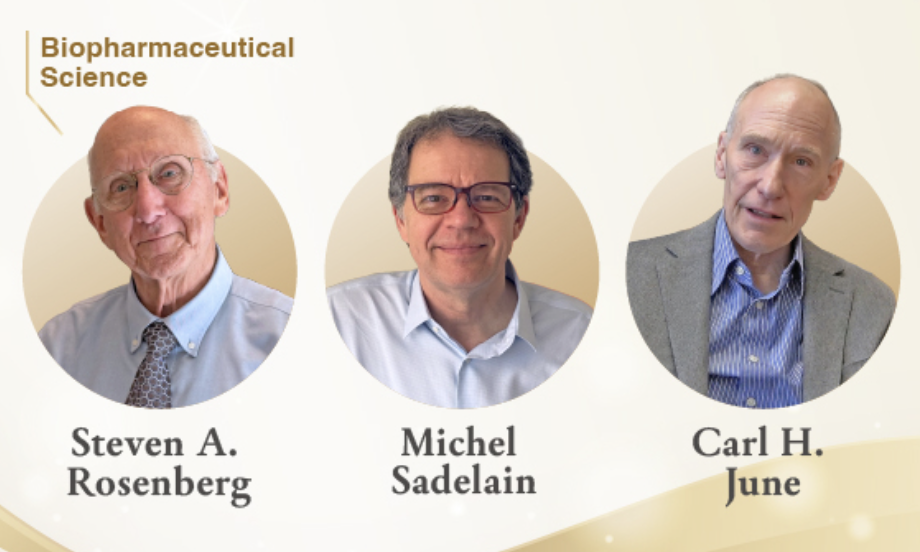
Steven A. Rosenberg: Unlocking the Potential of Tumor-Infiltrating Lymphocytes
Dr. Steven A. Rosenberg, Chief of Surgery at the U.S. National Cancer Institute, pioneered the use of tumor-infiltrating lymphocytes (TILs).
During the 1980s, his research demonstrated that immune cells naturally present within tumors could be isolated, expanded in the laboratory, and reinfused into patients to mount a stronger anti-tumor response [3].
This approach produced durable clinical responses in patients with metastatic melanoma and provided the first compelling evidence that the immune system could be harnessed to eliminate established cancers. Rosenberg’s pioneering work established many of the principles that continue to guide cellular immunotherapy today [3].
Michel Sadelain: Engineering the Immune System
Although naturally occurring immune cells can recognize some cancers, they are often unable to detect many tumor types effectively. Dr. Michel Sadelain addressed this limitation by developing Chimeric Antigen Receptor (CAR) T-cell technology, which genetically engineers a patient’s own T cells to recognize specific proteins expressed on cancer cells [2,4].
His research transformed genetic engineering into a practical therapeutic strategy, demonstrating that modified T cells could selectively destroy cancer cells while minimizing damage to normal tissues. His discoveries paved the way for the development of several FDA-approved CAR-T therapies that are now used worldwide [4].
Carl H. June: Translating CAR-T Therapy into Clinical Success
Dr. Carl H. June played a pivotal role in translating CAR-T cell technology from laboratory research to clinical practice. His landmark clinical trials demonstrated unprecedented success in patients with relapsed or treatment-resistant leukemia and lymphoma, many of whom had exhausted all available treatment options [2,5].
The remarkable clinical responses observed in these studies established CAR-T therapy as one of the most successful examples of personalized medicine. Today, CAR-T therapies are approved for several hematological malignancies and continue to expand into additional cancer types through ongoing clinical research [5].
A Lasting Impact on Modern Medicine
Together, Rosenberg, Sadelain, and June transformed cancer immunotherapy from an experimental concept into a powerful clinical reality. Their discoveries have:
- Established adoptive cell therapy as a new pillar of cancer treatment.
- Enabled personalized therapies using patients’ own immune cells.
- Inspired next-generation therapies targeting solid tumors.
- Accelerated advances in gene editing, synthetic biology, and regenerative medicine [2,4,5].
Beyond oncology, researchers are now exploring engineered immune cells for autoimmune diseases, infectious diseases, and regenerative medicine, highlighting the broad potential of cellular immunotherapy [4,5].
Current Clinical Success and Therapeutic Efficacy of CAR-T Therapy
CAR-T cell therapy has progressed from an experimental strategy to an established treatment for several relapsed or refractory hematological malignancies. Clinical studies have demonstrated particularly high response rates in B-cell leukemias, lymphomas, and multiple myeloma. For example, FDA-reviewed data for lisocabtagene maraleucel in relapsed/refractory marginal zone lymphoma showed an overall response rate of 84.4%, including a 55.8% complete response rate [6]. In multiple myeloma, BCMA-directed CAR-T therapies have similarly produced response rates exceeding 80% in some clinical settings [7]. Importantly, long-term follow-up indicates that a subset of patients can achieve remarkably durable remissions, with some remaining disease-free for many years after a single infusion [8]. These outcomes demonstrate the potential of CAR-T cells to provide durable, and in some patients potentially curative, responses in otherwise difficult-to-treat cancers.
Looking Ahead
The 2026 Tang Prize recognizes more than three exceptional scientists, it celebrates a paradigm shift in medicine. By demonstrating that immune cells can be engineered into living medicines, Rosenberg, Sadelain, and June have reshaped the future of biomedical science [2].
As research continues to improve the safety, accessibility, and effectiveness of cellular therapies, their pioneering contributions will remain foundational to the next generation of precision medicine. The 2026 Tang Prize in Biopharmaceutical Science stands as a tribute to decades of scientific perseverance that have brought new hope to patients facing some of the world’s most challenging cancers.
References
Neelapu SS, et al. Ten-Year Outcomes after CAR T-Cell Therapy for B-Cell Lymphomas. New England Journal of Medicine. 2026. NEJM article
Focus Taiwan. 2026 Tang Prize in Biopharmaceutical Science awarded to pioneers of cellular immunotherapy. 16 June 2026. https://focustaiwan.tw/sci-tech/202606160005
Tang Prize Foundation. 2026 Tang Prize in Biopharmaceutical Science Laureates. https://www.tang-prize.org/
National Cancer Institute, Center for Cancer Research. Steven Rosenberg Named a Recipient of the 2026 Tang Prize in Biopharmaceutical Science. https://ccr.cancer.gov/news/article/steven-rosenberg-named-a-recipient-of-the-2026-tang-prize-in-biopharmaceutical-science
Tang Prize Foundation. Biography of Michel Sadelain. https://www.tang-prize.org/en/
Plataforma Media. 2026 Tang Prize in Biopharmaceutical Science awarded to three pioneers of cellular immunotherapy. https://www.plataformamedia.com/en/2026/06/16/2026-tang-prize-in-biopharmaceutical-science-awarded-to-three-pioneers-of-cellular-immunotherapy/
U.S. Food and Drug Administration. FDA approves lisocabtagene maraleucel for relapsed or refractory marginal zone lymphoma. 2025. FDA clinical review
U.S. Food and Drug Administration. FDA approves first cell-based gene therapy for adult patients with multiple myeloma. FDA announcement


Leave a Reply