Ova Emilia, MD, Ph.D., Dian K. Nurputra, MD, Ph.D., & Rusdy Ghazali Malueka, MD, Ph.D.
Univesitas Gadjah Mada, Yogyakarta, Indonesia
Introduction: A Nation at the Inflection Point
As the ACTO Annual Meeting 2026 convenes in Jakarta, a fitting recognition of Indonesia’s growing prominence in the Asian cellular therapy landscape, the country finds itself at a defining inflection point. With a population exceeding 280 million, an escalating burden of non-communicable and degenerative diseases, and a life sciences ecosystem in active formation, Indonesia is no longer merely a peripheral observer of the global cell and gene therapy (CGT) revolution. Universities, long regarded as the intellectual backbone of the nation, are now emerging as active architects of this transformation.
From the university perspective, the CGT landscape in Indonesia presents both exceptional promise and sobering complexity. This article examines the current state of academic engagement in CGT, highlights concrete research contributions emerging from leading institutions, recognizes the pioneering role of Universitas Indonesia and Universitas Airlangga, identifies the progress being made by Universitas Gadjah Mada (UGM) and Dr. Sardjito Hospital as its principal academic hospital, and proposes a strategic framework for breakthrough — one that places universities not at the margins, but at the center of Indonesia’s future advanced-therapy ecosystem.
The Academic Landscape: From Pioneering Nodes to a National Network
Indonesian universities have been laying the groundwork for CGT and regenerative medicine for more than a decade, although progress has been uneven because of resource constraints, regulatory transition, and the high capital intensity of good manufacturing practice (GMP)-grade cell production. The most important development is that the national landscape is no longer defined by isolated laboratories. It is gradually taking the shape of an academic-clinical network, with several universities acting as pioneering nodes and others beginning to build specialized capacity. Universitas Indonesia (UI), through the Faculty of Medicine UI and Dr. Cipto Mangunkusumo Hospital (FKUI-RSCM), deserves clear recognition as one of Indonesia’s earliest academic pioneers. FKUI-RSCM began stem-cell research in 2008 and subsequently developed a service-based translational research platform by involving more than 30 subspecialist clinicians across indications such as non-union fractures, long-bone defects, spinal cord injury, osteoarthritis, diabetic foot, stroke, osteoporosis, heart disease, skin rejuvenation, and alopecia.
Universitas Airlangga (UNAIR) is another major pioneer, particularly through its dedicated Stem Cell Research and Development Center, which explicitly aims to become a nationally and internationally standardized center for stem-cell and regenerative-medicine research, testing, laboratory training, and public-facing research support. In 2024 UNAIR publicly highlighted the expansion of stem-cell applications from degenerative disease toward autoimmune disease and cancer, including immunomodulation, dendritic-cell vaccines, T-cell modification concepts, and hematopoietic recovery after cancer treatment.
Taken together, UI and UNAIR helped establish the intellectual, clinical, and institutional foundation for Indonesian stem-cell development. Their experiences show that academic leadership matters in at least three ways: building multidisciplinary clinical platforms, producing translational evidence, and legitimizing a field that is vulnerable to both premature commercialization and public misunderstanding.
Universitas Gadjah Mada, Dr. Sardjito Hospital, and UGM Academic Hospital: Consolidating an Academic-Hospital Platform
At UGM, academic CGT engagement is anchored through a formal institutional structure spanning the Faculty of Medicine, Public Health and Nursing (FK-KMK UGM), Dr. Sardjito Hospital as the main teaching hospital, and UGM Academic Hospital. Dr. Sardjito Hospital has been designated by the Indonesian Ministry of Health as one of Indonesia’s hospital centers for the development of stem-cell medical services, research, and education. Although stem-cell services had not yet been operational there before 2015, the subsequent creation of the Dr. Sardjito Stem Cell Team and the FK-KMK UGM core stem-cell team marked a deliberate institutional transition from aspiration to organized capacity-building.
This development began with structured benchmarking and partnership-building. In December 2015, the FK-KMK UGM team conducted a comparative study to the Tissue Engineering and Cell Therapy (TECT) Laboratory at the National University Hospital, Singapore, and to the Stem Cell and Cancer Institute in Jakarta. The process led to cooperation among FK UGM, Dr. Sardjito Hospital, UGM Academic Hospital, and PT Bifarma Adiluhung, a Kalbe Farma subsidiary active in stem-cell development. The UGM platform therefore emerged not merely as a laboratory initiative, but as a university-hospital-industry collaboration model.
This foundation has since translated into verifiable research output. The Stem Cell Team of FK-KMK UGM and Dr. Sardjito Hospital, in collaboration with Dr. Moewardi Hospital Solo and Hasan Sadikin Hospital Bandung, conducted a double-blind, multicenter, randomized, placebo-controlled clinical trial of normoxic allogeneic umbilical-cord mesenchymal stem cells as adjunctive therapy for severe COVID-19. Published in Scientific Reports in 2023, the study reported encouraging clinical results, including improved patient recovery, and represents an important example of a rigorous, GCP-compliant stem-cell clinical trial conducted within an Indonesian academic-hospital network.
The FK-KMK UGM and Dr. Sardjito Hospital translational programs are being developed as formal clinical trials and research-based clinical services, with knee osteoarthritis and post-traumatic spinal cord injury among the earliest indications developed. These programs include stem-cell approaches using autologous bone-marrow-derived cells and allogeneic umbilical-cord/Wharton’s jelly-derived mesenchymal stem cells, supported by structured clinical and imaging follow-up.
The broader FK-KMK UGM–Dr. Sardjito Hospital roadmap extends to additional indications, including ischemic stroke, Parkinson disease, cerebral palsy, intractable epilepsy, chronic kidney disease, diabetic nephropathy, diabetes mellitus, autoimmune diseases, pulmonary disease, dermatologic applications, chronic ulcers, and retinitis pigmentosa. These programs are at different stages, ranging from ongoing or planned clinical trials and structured service-based research to protocol development, partnership negotiation, and regulatory-permit preparation. The hospital currently has complete application capability for intravenous, intramuscular, intra-articular, intrathecal, intracranial, intra-arterial, local, and regional delivery, while cell processing is performed through formal cooperation with licensed processing facilities, including Regenic and Prostem/Prodia Stem Cell as GMP -certified partners.
More recently, UGM signed a new memorandum of understanding in January 2025 with PT Stem Cell and Cancer Research Indonesia (SCCR) and Yayasan Agung Putra Ibrahim (YAPI) for cooperation encompassing medical services, clinical trials, and stem cell research and technology development, with full institutional support from UGM for accelerating stem cell and cancer research.
In the clinical translation area, researchers at FKKMK UGM have also contributed to the scientific discourse on emerging modalities beyond conventional stem cell therapy. Prof. Y. Widodo Wirohadidjojo from the Department of Dermatology and Venereology noted that the academic community is moving progressively from secretome-based approaches toward exosome-based therapies, reflecting alignment with the frontiers of international regenerative medicine science.
The Regulatory and Ecosystem Progress
The broader enabling environment for university-led CGT is also evolving favorably. The Indonesian government established the Indonesia Clinical Research Centre (INA-CRC) in mid-2024 to streamline clinical trial processes and attract international sponsors. In late 2025, INA-CRC jointly hosted a national workshop with the WHO Indonesia Country Office and the WHO Western Pacific Regional Office (WPRO), piloting the WHO Clinical Trial Unit-Maturity Framework — aligning with the Global Action Plan for Clinical Trial Ecosystem Strengthening.
On the regulatory side, BPOM Regulation No. 24 of 2024 establishes stringent requirements for pre-clinical and clinical data submissions, including facility standards, quality control measures, and licensing for cell and gene therapy products, creating formal approval pathways for advanced therapy medicinal products. Meanwhile, BPOM has reported that the global market for cell and gene therapies has climbed from USD 9 billion to USD 22.6 billion in just two years, and the domestic Indonesian stem cell therapy market is projected to reach substantial scale — underscoring the strategic economic imperative alongside the therapeutic one.
Nationally, BRIN and ASPI co-hosted an international seminar in August 2025 on stem cell innovation featuring BPOM regulatory insights, a scientific competition, and concrete steps toward building a national regenerative medicine roadmap — demonstrating that the institutional will to cohere this ecosystem is real and growing.
Persistent Challenges: An Honest Assessment
Despite this progress, universities continue to face structural, financial, and systemic barriers that require frank acknowledgment. The infrastructure gap remains substantial. Most Indonesian university laboratories operate well below GMP standards, which are increasingly required not just for product commercialization but for compliant clinical trial execution.
BPOM has issued guidelines requiring GMP certification for cytokines, growth factors, and transfection reagents used in ex vivo manufacturing, pushing developers to transition from research-grade to GMP-grade inputs — a transition that demands capital investment few university budgets can accommodate independently.
Import dependency compounds the challenge. An estimated 95% of raw materials for stem cell production in Indonesia come from imports, creating a structural vulnerability and a challenge for national self-sufficiency in advanced therapies. Universities are ideally positioned to contribute upstream solutions through biomaterial research and process development, but only with targeted funding mandates.
The clinical trial pipeline, while improving, remains thin. Most active CGT trials in Indonesia are still in early-phase (Phase I/II) stages, focusing on stem cell-based therapies and regenerative medicine, typically conducted in collaboration between hospitals, universities, and biotech firms under Ministry of Health and BRIN oversight. Transitioning from these exploratory studies to well-powered, pivotal trials requires not just scientific readiness, but also coordinated capacity in biostatistics, data management, regulatory affairs, and clinical operations — competencies that must be systematically built within academic medical centers.
There is also the persistent challenge of unproven therapies. Across the region, unvalidated stem cell offerings at unregulated clinics continue to erode public trust in legitimate science. Universities must assume their role not merely as knowledge producers, but as public educators and institutional guardians of ethical standards in CGT.
A Strategic Framework for Breakthrough
The path forward for Indonesian universities in CGT is clear in direction, even if demanding in execution. Several strategic priorities stand out.
Establishing CGT Centers of Excellence.
Not every institution needs to cover the entire CGT value chain. A nationally coordinated strategy — led by the Ministry of Education and Research in partnership with Ministry of Health and BRIN — should designate a small number of universities as national CGT Centers of Excellence with dedicated GMP-capable manufacturing units, translational research programs, and clinical trial infrastructure. UGM and UNAIR, given their existing commitments, are natural anchors for such a network in Java; other institutions in Sumatra, Sulawesi, and Eastern Indonesia should be strategically developed to ensure equitable geographic coverage.
Co-designing regulatory pathways.
Universities must engage BPOM as a co-design partner rather than a compliance endpoint. Academic institutions carry the scientific credibility and impartiality to help shape adaptive regulatory frameworks — particularly for investigator-initiated trials, academic-sponsored studies, and hospital-based CGT services operating under the Ministerial permit system.
Building a deliberate talent pipeline.
Indonesia continues to lose trained CGT scientists to overseas institutions, not solely due to compensation differentials, but also due to the absence of structured domestic career pathways in this specialty. Universities should design dedicated doctoral and postdoctoral programs in CGT — co-supervised with international partners, ideally through ACTO and regional networks — with clear re-entry pathways and retention incentives anchored to national research programs.
Leveraging Indonesia’s unique research advantages.
Indonesia’s remarkable genetic diversity, its unique tropical disease burden, and its large patient population represent genuine research assets that are underutilized in the global CGT literature. Academic researchers should be strategically encouraged to design studies that address conditions disproportionately affecting Indonesian and Southeast Asian populations — conditions for which existing global CGT pipelines offer little coverage, and for which Indonesia could become a scientific leader.
Strengthening the university-hospital-industry triangle.
The collaboration model between UGM, hospitals (Dr. Sardjito and UGM Academic hospital), and industry partners demonstrates what is achievable when this triangle functions. Formalizing, expanding, and incentivizing such models — with clear intellectual property frameworks, revenue-sharing mechanisms, and joint academic output expectations — should become a national policy priority.
Closing Perspective: The Role Universities Cannot Afford to Cede
Universities occupy a distinctive position in the CGT ecosystem — one that neither government agencies nor private industry can fully replicate. They are the sites of disinterested inquiry, long-horizon thinking, and the training of the next generation of scientists, clinicians, and regulators. They are also, at their best, the institutional conscience of a field where commercial pressures and patient desperation can easily converge in ways that are neither scientifically nor ethically sound.
As Jakarta hosts the ACTO Annual Meeting 2026, this moment offers Indonesian academic institutions a rare and consequential opportunity: to articulate a university-led vision for CGT development that is rigorous, equitable, globally connected, and distinctly Indonesian. UI and UNAIR helped build the early intellectual and clinical foundations; UGM and Dr. Sardjito Hospital now illustrate how an academic medical center can consolidate service readiness, multicenter research experience, clinical protocols, digital governance, and a growing trial pipeline in osteoarthritis, spinal cord injury, COVID-19, and other target indications.
The national roadmap being crafted through BRIN-ASPI and the emerging regulatory maturity under BPOM should now be matched by greater academic coordination, transparent data reporting, and a shared commitment to ethical translation.
Science is advancing. The regulation is maturing. The global community is watching. What remains is the strategic will — and that, more than any single breakthrough, is what universities are uniquely positioned to provide.
References:
- Indonesia CGT 2026 Update — The ACTO Times https://theactotimes.com/2026/03/20/indonesia-cell-gene-therapy-cgt-2026-update/
- BPOM CGT Regulation Perspective — The ACTO Times https://theactotimes.com/2026/03/20/regulation-of-cell-and-gene-therapy-cgt-in-indonesia-perspective-of-bpom/
- UC-MSC Clinical Trial in Severe COVID-19 (UGM/RSUP Dr. Sardjito et al.) — Scientific Reports, Nature, August 2023 https://www.ncbi.nlm.nih.gov/pmc/articles/PMC10397314/
- Stem Cell Team FKKMK UGM — Official Website https://stemcell.fkkmk.ugm.ac.id/tentang-kami/
- UGM – MoU with SCCR & YAPI, January 2025 https://ugm.ac.id/en/news/ugm-collaborates-on-stem-cell-technology-with-yapi-and-pt-stem-cell-indonesia/
- BRIN-ASPI International Seminar on Stem Cell Innovation, August 2025 https://aspindonesia.co.id/brin-aspi-international-seminar-2025-future-directions-and-opportunities-in-stem-cell-innovation-for-clinical-application-and-the-health-industry-lights-the-path-for-indonesia/
- Universitas Airlangga Stem Cell Research and Development Center https://unair.ac.id/en/stem-cell-research-center/
- BPOM Legal Framework for Cell-Based Medicine (ICLG) https://iclg.com/briefing/14597-bpom-introduces-legal-framework-for-human-cell-based-medicine
- UGM — Affordable Stem Cell Therapy Needs Stronger Support (December 2025) https://ugm.ac.id/en/news/affordable-stem-cell-therapy-services-need-stronger-support-experts-say/
- Standard Regulation for Stem Cell Products in Indonesia — ResearchGate / Cytotherapyhttps://www.researchgate.net/publication/351499168_Standard_regulation_for_stem_cell_products_in_indonesia
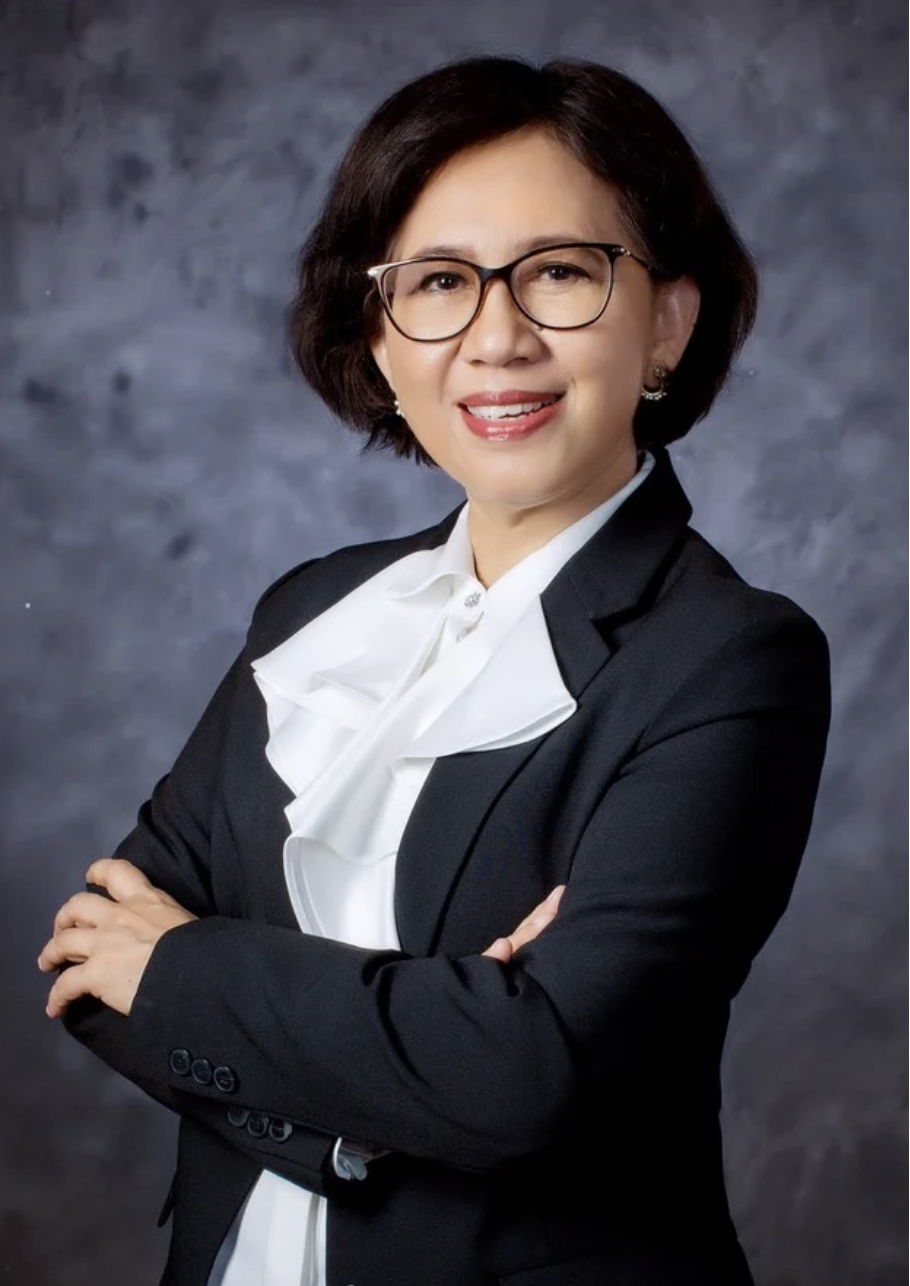
Prof. Ova Emilia, MD, M.Med.Ed., Ph.D.
Rector of Univesitas Gadjah Mada (UGM) Indonesia


Leave a Reply