Amin Soebandrio1, Rahyussalim2, Cynthia Retna Sartika1,2, Rusdy Ghazali Malueka1,2,Isabella Kurnia Liem2, Angliana Chouw2, Rima Haifa2,Retina Syhallala Askandar2, Blessari Tesalonika Woran2
1Stem Cell Committee, Ministry of Health of Indonesia, Indonesia, 2Indonesian Stem Cell Association, Indonesia
Abstract
Cell and gene therapy (CGT) has emerged as an important field of modern medicine, integrating regenerative medicine, stem cell science, and advanced biologics to address diseases with limited therapeutic options. In Indonesia, the CGT ecosystem remains primarily driven by stem cell–basedregenerative medicine, particularly mesenchymal stem cell (MSC)-based therapies andsecretome-related products. Over the past decade, Indonesia has demonstrated progressive development in translational research, clinical implementation, and regulatory strengthening through collaboration among government institutions, academia, healthcare providers, and industry stakeholders. This article reviews the current development of Indonesia’s cell-based and emerging CGT ecosystem, including regulatory evolution, research progress, clinical applications, translational development, and implementation challenges. Indonesia’s regulatory framework has gradually evolved toward a more structured system aligned with advanced therapy medicinal product (ATMP) principles through complementary oversight by the Ministry of Health and the Indonesian Food and Drug Authority (BPOM).
Current development remains dominated by regenerative medicine and MSC-based translational programs, while gene therapy and immune-cell engineering activities are still at an early stage. Major challenges persist in GMP-compliant infrastructure, manufacturing readiness, funding, long-term evidence generation, and public awareness. In this evolving landscape, the Indonesian Stem Cell Association (ASPI) plays an important role in supporting scientific exchange, education, standardization, and regional collaboration.
Keywords: cell therapy, stem cell, regenerative medicine, Indonesia, ASPI
Introduction
Cell and gene therapy (CGT) has rapidly emerged as an important field of modern medicine, combining genetic engineering with stem cell-based approaches to treat diseases that remain difficult to manage using conventional therapies. Stem cells have become a major foundation of CGT development, supporting regenerative medicine and gene-modified therapeutic platforms. Over the past decade, CGT has expanded significantly, with multiple advanced therapy medicinal products (ATMPs), including CAR-T and gene-modified therapies, receiving regulatory approval in major markets worldwide [1,2]. In parallel, the global CGT pipeline continues to grow through advances in stem cell technologies, viral vectors, and translational biomanufacturing [3].
Across the Asia-Pacific region, CGT development has accelerated through supportive regulatory frameworks, translational infrastructure, and expanding clinical research activities [17]. Within this landscape, Indonesia is emerging through stem cell-based regenerative medicine programs, particularly mesenchymal stem cell (MSC)-based therapies and translational applications. The Indonesian Stem Cell Association (ASPI) plays an important role in this ecosystem by connecting researchers, clinicians, regulators, academic institutions, and industry stakeholders to support regenerative medicine and emerging CGT development in Indonesia [14–18].
This article highlights the current development of Indonesia’s cell-based and emerging CGT ecosystem, focusing on regulatory evolution, translational progress, implementation challenges, and the strategic role of ASPI in supporting national and regional advancement.
Overview of ASPI (Indonesian Stem Cell Association)
The Indonesian Stem Cell Association (Asosiasi Sel Punca Indonesia, ASPI) is a professional non-profit organization established to support the advancement of stem cell science, regenerative medicine, and cellular therapy in Indonesia. The organization emerged from collaborations among clinicians, researchers, academic institutions, government representatives, and industry stakeholders involved in regenerative medicine and translational biomedical research.
Vision and Mission
ASPI aims to become a leading national and regional platform for stem-cell education, scientific collaboration, and regenerative medicine development, positioning Indonesia as an active contributor within regional cellular therapy networks [14,15]. The organization promotes high-quality and ethical stem cell research and supports evidence-based clinical applications in regenerative medicine.
In addition, ASPI facilitates scientific exchange, training activities, workshops, and collaborative engagement among Indonesian and international stakeholders, including scientists, clinicians, regulators, healthcare institutions, and industry representatives [14,15].
Over time, ASPI has evolved into an important national platform connecting clinicians, researchers, academic institutions, regulators, and industry stakeholders involved in stem cell and cellular therapy development. The organization actively organizes scientific meetings, educational seminars, workshops, and collaborative programs related to stem cell research, regenerative medicine, and translational cellular therapy [15].
ASPI also contributes to efforts toward harmonization between national practices and evolving international standards in cellular therapy and regenerative medicine. The organization supports ethical and evidence-based implementation of stem cell therapies while promoting capacity building, scientific collaboration, and public education in emerging CGT-related fields [13,15].
Regulatory landscape in Indonesia
Indonesia has progressively developed a more structured regulatory framework for stem cell-based therapies and advanced therapy medicinal products (ATMPs), transitioning from a predominantly service-based approach in the early 2000s toward a more comprehensive framework aligned with ATMP-related regulatory principles [5–9]. This regulatory evolution reflects both the growing clinical adoption of regenerative medicine and the increasing need to address safety, efficacy, quality control, and commercialization concerns associated with emerging cellular therapies.
The Indonesian regulatory system operates under a dual-track structure in which the Ministry of Health (MoH) and the Badan Pengawas Obat dan Makanan (BPOM) hold complementary roles. The Ministry of Health regulates healthcare services and the clinical implementation of stem cell therapies within licensed healthcare facilities, whereas BPOM regulates therapeutic products, including biologics and advanced therapy products, covering manufacturing, product evaluation, clinical trials, and post-marketing oversight [5,7,9].
The legal foundation for this framework is anchored in national health legislation, including Health Law No. 17/2023, which replaced the earlier Health Law No. 36/2009 [6]. Additional implementation guidance was introduced through the Ministry of Health Regulation No. 32/2018 concerning stem cell services, which established standards for the provision of stem cell-based medical services within healthcare facilities [7].
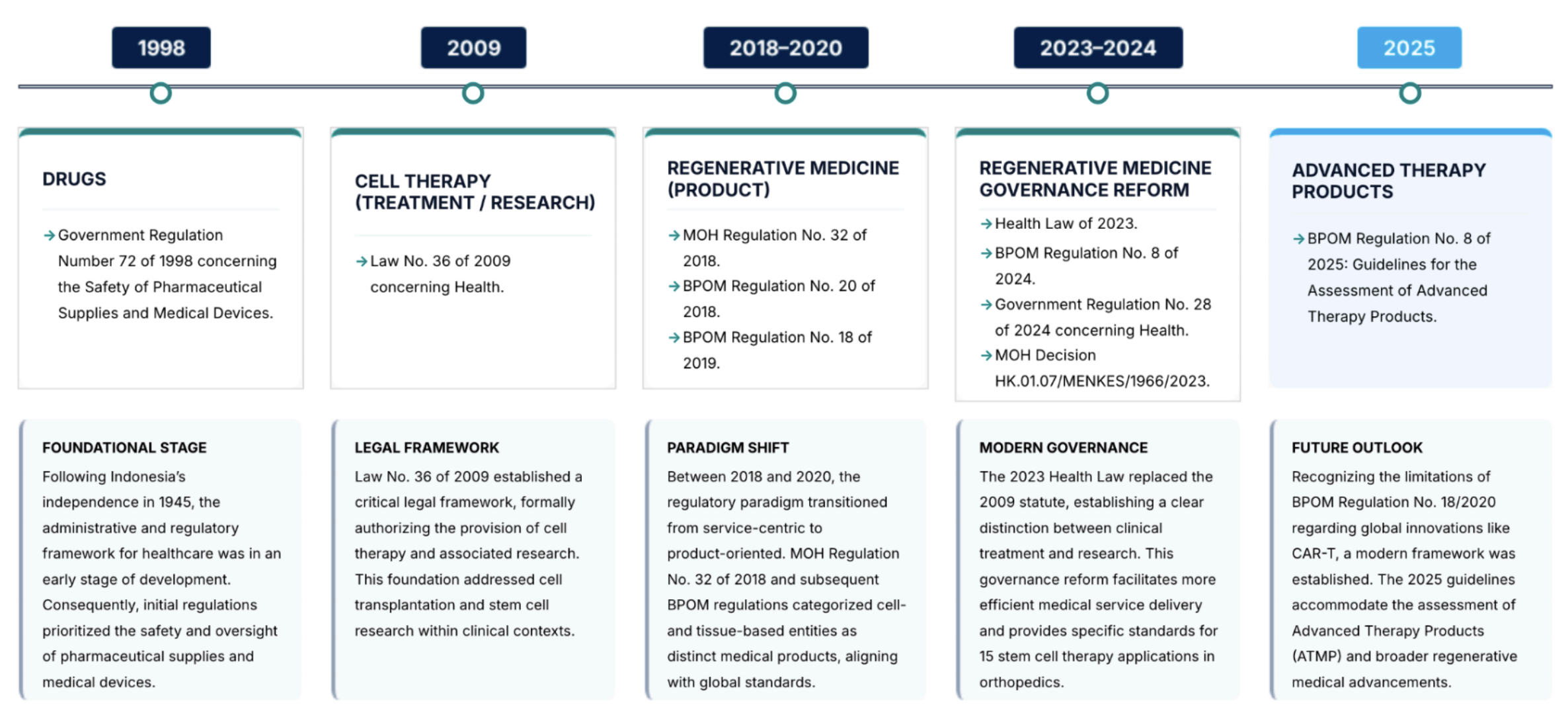
Figure 1. Evolution of Indonesia’s regulatory framework for stem cell therapy and advanced therapy medicinal products (ATMPs) from 1998 to 2025, illustrating the transition from limited oversight toward increasingly comprehensive regulation of regenerative medicine and advanced cellular therapies.
BPOM subsequently strengthened the product-based regulatory pathway through BPOM Regulation No. 18/2020 concerning the evaluation of human cell-based medicinal products [5].
Indonesia has progressively developed a more structured regulatory framework for stem cell-based therapies and advanced therapy medicinal products (ATMPs), transitioning from a predominantly service-based approach in the early 2000s toward a more comprehensive framework aligned with ATMP-related regulatory principles [5–9]. This regulatory evolution reflects both the growing clinical adoption of regenerative medicine and the increasing need to address safety, efficacy, quality control, and commercialization concerns associated with emerging cellular therapies.
The Indonesian regulatory system operates under a dual-track structure in which the Ministry of Health (MoH) and the Badan Pengawas Obat dan Makanan (BPOM) hold complementary roles. The Ministry of Health regulates healthcare services and the clinical implementation of stem cell therapies within licensed healthcare facilities, whereas BPOM regulates therapeutic products, including biologics and advanced therapy products, covering manufacturing, product evaluation, clinical trials, and post-marketing oversight [5,7,9].
The legal foundation for this framework is anchored in national health legislation, including Health Law No. 17/2023, which replaced the earlier Health Law No. 36/2009 [6]. Additional implementation guidance was introduced through the Ministry of Health Regulation No. 32/2018 concerning stem cell services, which established standards for the provision of stem cell-based medical services within healthcare facilities [7]. BPOM subsequently strengthened the product-based regulatory pathway through BPOM Regulation No. 18/2020 concerning the evaluation of human cell-based medicinal products [5].
Between 2018 and 2025, Indonesia experienced substantial regulatory refinement in regenerative medicine and advanced therapies. BPOM Regulation No. 8/2025 further expanded the regulatory framework toward broader ATMP concepts and clarified evaluation pathways for advanced therapy products [9]. Government Regulation No. 28/2024 also strengthened implementation standards under the Health Law framework and clarified distinctions between healthcare services, clinical research, and therapeutic product oversight [8,22].
Under the current regulatory approach, minimally manipulated and homologous-use cell therapies may still be implemented as healthcare services within licensed hospitals under Ministry of Health supervision, provided they are not commercialized as pharmaceutical products [7,20]. This distinction is particularly relevant for stem cells, secretome-based products, exosomes, and extracellular vesicles, which may fall under either service-based or product-based regulation depending on their degree of manipulation, intended use, and commercialization pathway [9,21].
Ethical and compliance considerations remain integral components of Indonesia’s regenerative medicine governance framework. Clinical research involving stem cell or ATMP-based interventions must undergo institutional ethics review and comply with Good Clinical Practice principles [13].
BPOM regulations also emphasize risk-benefit assessment, protocol evaluation, patient safety monitoring, and informed consent procedures prior to human clinical application [5,9].
Manufacturing and processing activities for commercialized cell-based products are required to comply with GMP/CPOB standards and quality-control requirements [5,9]. Meanwhile, hospital-based cell-processing facilities that do not possess full GMP certification remain limited to internal and non-commercial clinical applications. Indonesian regulatory authorities also impose restrictions on the promotion and advertisement of stem cell therapies, particularly regarding unsupported therapeutic claims and misleading patient communication [21].
Despite these advancements, several regulatory challenges remain. The distinction between service-based implementation and product-based therapeutic classification continues to evolve, particularly for autologous and minimally manipulated therapies [19,20]. In addition, implementation of GMP standards, harmonization between institutions, long-term pharmacovigilance systems, and consistent enforcement against unapproved stem cell practices remain important areas for further development.
Overall, Indonesia’s regulatory landscape for stem cell therapies and ATMPs is undergoing a significant transition toward greater standardization, stricter oversight, and closer alignment with international regulatory practices [5–9]. Recent policy developments indicate a clear national direction toward strengthening evidence-based evaluation and patient safety while maintaining controlled clinical access to regenerative medicine applications.
Current development of cell-based therapy & emerging CGT in Indonesia
Indonesia’s cell and gene therapy (CGT) ecosystem is still emerging, with stem cell-based approaches serving as the primary driver of innovation and clinical translation. The research and academic dimension is increasingly coordinated by the National Research and Innovation Institute (BRIN), particularly through its Health Research Organisation. Meanwhile, clinical translation, safety oversight, and implementation are shaped by the Indonesian Ministry of Health and the Indonesian Food and Drug Agency (BPOM). This institutional alignment is critical, as CGT development depends not only on scientific capability but also on governance, regulation, and the ability to translate laboratory advances into clinical practice.
Research & Academic Development
Research activity in Indonesia is currently dominated by stem cell-based regenerative medicine, particularly mesenchymal stem cell (MSC) research. Universities, hospitals, research institutes, and translational laboratories have increasingly collaborated in programs involving MSCs derived from umbilical cord tissue, adipose tissue, bone marrow, and other biological sources. Current research activities largely focus on regenerative medicine applications, immunomodulation, tissue repair, inflammatory disorders, and degenerative diseases.
The National Research and Innovation Agency (BRIN), particularly through its Health Research Organization, plays an important role in coordinating national biomedical research priorities and supporting translational research initiatives related to regenerative medicine and emerging cellular therapies [12]. BRIN’s expanding involvement in genomics, biobanking, biomedical data management, and translational infrastructure development may further support future CGT-related innovation in Indonesia [12].
In recent years, growing interest has also been observed in secretome-, exosome-, and extracellular vesicle-based approaches. These strategies are considered attractive due to their potentially lower manufacturing complexity, broader scalability, and reduced logistical challenges compared with live-cell therapies [21]. Several academic institutions, healthcare centers, and biotechnology-related initiatives have begun exploring translational applications involving conditioned medium, secretome products, and extracellular vesicle technologies.
Compared with stem cell-based regenerative medicine, gene therapy development in Indonesia remains at an earlier stage. Current activities are still limited primarily to exploratory translational research and early-stage investigation involving molecular therapies, immune-cell engineering, and immunomodulatory platforms. As a result, Indonesia’s current CGT ecosystem remains predominantly cell therapy-driven rather than gene therapy-driven.
Clinical Applications
In Indonesia, clinical applications of CGT remain largely centered on cell-based therapies, particularly within orthopedic, neurological, aesthetic, and broader regenerative medicine indications. Current clinical practice is dominated by mesenchymal stem cell (MSC)-based approaches, alongside dendritic cell-related therapies and emerging secretome or conditioned-medium applications.
Therapeutic targets commonly include osteoarthritis, musculoskeletal disorders, spinal injuries, stroke, cerebral palsy, and degenerative conditions. These therapeutic areas reflect both clinical demand and the relative maturity of MSC-based regenerative platforms within Indonesia’s existing healthcare infrastructure.
Despite ongoing clinical implementation, the field remains in a transitional phase between research-based therapy and regulated clinical practice. While several stem cell-based interventions are already offered in healthcare settings, many applications continue to rely on early-stage clinical evidence and translational research support. Data from ClinicalTrials.gov and the Indonesia Clinical Research Registry (INA-CRR) indicate that CGT-related activities in Indonesia are still predominantly concentrated in early clinical development phases, with many studies categorized as phase I or phase II clinical investigations rather than large-scale confirmatory trials [3,4].
Standardization of manufacturing protocols, long-term safety monitoring, efficacy validation, and multicenter clinical evaluation remain ongoing challenges. These factors highlight the importance of continued clinical validation to ensure that regenerative medicine and emerging CGT applications in Indonesia remain scientifically grounded, ethically implemented, and sustainably integrated into healthcare systems.
Recent regulatory developments from the Ministry of Health have contributed to improved clinical guidance and standardization for stem cell-based medical services. KMK No. HK.01.07/MENKES/1359/2024 introduced guidance for orthopedic and traumatology applications, while KMK No. HK.01.07/MENKES/1200/2025 provided implementation guidance for plastic reconstructive and aesthetic indications [10,11].
Together with BPOM oversight and evolving ATMP-related regulations, these policies represent important steps toward strengthening evidence-based clinical implementation and reducing variability in regenerative medicine practices across Indonesia.
Despite ongoing clinical implementation, the field remains in a transitional phase between research-based therapy and regulated clinical practice. While several stem cell-based interventions are already offered in healthcare settings, many applications continue to rely on early-stage clinical evidence and translational research support. Data from ClinicalTrials.gov and the Indonesia Clinical Research Registry (INA-CRR) indicate that CGT-related activities in Indonesia are still predominantly concentrated in early clinical development phases, with many studies categorized as phase I or phase II clinical investigations rather than large-scale confirmatory trials [3,4].
Standardization of manufacturing protocols, long-term safety monitoring, efficacy validation, and multicenter clinical evaluation remain ongoing challenges. These factors highlight the importance of continued clinical validation to ensure that regenerative medicine and emerging CGT applications in Indonesia remain scientifically grounded, ethically implemented, and sustainably integrated into healthcare systems.
Recent regulatory developments from the Ministry of Health have contributed to improved clinical guidance and standardization for stem cell-based medical services. KMK No. HK.01.07/MENKES/1359/2024 introduced guidance for orthopedic and traumatology applications, while KMK No. HK.01.07/MENKES/1200/2025 provided implementation guidance for plastic reconstructive and aesthetic indications [10,11]. Together with BPOM oversight and evolving ATMP-related regulations, these policies represent important steps toward strengthening evidence-based clinical implementation and reducing variability in regenerative medicine practices across Indonesia.
CGT products and translational pipeline in Indonesia
Indonesia’s current CGT landscape is characterized primarily by hospital-based implementation, translational products, and early commercialization initiatives rather than fully mature mass-market advanced therapy products. Current development remains strongly focused on mesenchymal stem cell (MSC)-based platforms, including umbilical cord-derived MSCs, conditioned medium, secretome products, and extracellular vesicle-related approaches [5,7,9].
Several healthcare institutions, biotechnology companies, and university-industry collaborations are actively involved in these developments. Regenerative medicine centers, translational laboratories, and industry-linked biologics programs have gradually expanded their activities in cell processing, translational bioprocessing, and regenerative medicine services. These developments indicate gradual movement toward a more product-oriented regenerative medicine ecosystem in Indonesia.
Indonesia’s translational pipeline also includes exploratory work involving immune-cell therapies such as natural killer (NK) cells and other immunomodulatory approaches.
However, most products and technologies remain in early translational or investigational stages and have not yet progressed into large-scale commercial deployment or late-phase clinical development. The expansion of GMP-compliant manufacturing facilities and translational bioprocessing infrastructure is expected to play an important role in supporting future CGT development within Indonesia [5,9].
Challenges in CGT development in Indonesia
Regulatory gaps
Although Indonesia’s regulatory framework for regenerative medicine and advanced therapies has improved substantially, several areas remain challenging, particularly the distinction between service-based implementation and product-based therapeutic classification. Ministry of Health Regulation No. 32/2018 established the healthcare-service pathway for stem cell implementation within licensed facilities, while BPOM Regulation No. 18/2020 and BPOM Regulation No. 8/2025 strengthened product-based oversight for human cell-based medicinal products and advanced therapy medicinal products (ATMPs) [5,7,9]. Nevertheless, harmonization between healthcare-service regulation and ATMP-style product evaluation continues to evolve, especially for minimally manipulated and autologous therapies [19,20].
Indonesian regulators have introduced progressive measures to address these gaps through clearer regulatory pathways, strengthened ethical oversight, implementation guidance for stem cell-based clinical services, and broader ATMP-oriented frameworks [5,7–9]. However, long-term follow-up requirements, pharmacovigilance systems, and post-marketing evaluation mechanisms for advanced therapies remain under further development. Recent efforts by the Ministry of Health and BPOM to strengthen monitoring systems, manufacturing standards, clinical governance, and evidence-based implementation represent important steps toward improving regulatory consistency and patient safety in regenerative medicine applications [5,8,9,13].
Infrastructure and Manufacturing Limitations
CGT manufacturing requires GMP-compliant facilities, advanced quality-control systems, and specialized technical expertise, which remain limited in Indonesia. Current challenges include the lengthy development and validation process for GMP facilities, restricted local availability of critical reagents and consumables, and limited capacity for advanced cell processing and vector-related manufacturing [5,9]. Dependence on imported materials and overseas manufacturing support may further increase production costs and reduce long-term scalability.
Nevertheless, important progress has been made to address these limitations. Government institutions, academic centers, hospitals, and industry stakeholders have increasingly invested in GMP-compliant infrastructure, translational bioprocessing facilities, and collaborative manufacturing platforms [9,12]. Public-private collaboration models and shared translational infrastructure initiatives are also beginning to emerge to strengthen domestic manufacturing readiness, reduce long-term dependence on foreign production systems, and support more sustainable CGT development within Indonesia.
Funding and Translational Ecosystem
Most CGT activities in Indonesia remain concentrated within academic research and early translational development phases. Long development timelines, high manufacturing costs, and uncertain reimbursement pathways continue to limit investment attractiveness, particularly for advanced therapies requiring complex manufacturing processes and extensive clinical validation.
Nevertheless, support for translational development has gradually increased through public-sector funding, academic-industry collaboration, and government-supported research initiatives involving BRIN, universities, hospitals, healthcare institutions, and biotechnology-related industry partners [12]. Emerging partnerships between academia, biotechnology companies, and clinical centers have started to strengthen translational capacity and improve pathways toward clinical implementation.
In recent years, government-supported grant mechanisms have increasingly encouraged the participation of both private and state-linked industries in downstream product development and translational commercialization. These initiatives aim to ensure that research outputs can be further developed into healthcare products and services with broader societal impact. Although funding remains fragmented and relatively limited for large-scale late-phase clinical development, these developments represent important progress toward building a more sustainable national CGT ecosystem [12].
Public awareness issues
Public understanding of stem cell and CGT technologies remains variable and may not always align with current scientific evidence and clinical limitations. Regenerative medicine is occasionally associated with unrealistic expectations or unsupported therapeutic claims, increasing the risk of misinformation and unregulated clinical practices [13,21].
The International Society for Stem Cell Research (ISSCR) guidelines emphasize the importance of evidence-based communication, ethical clinical translation, and responsible public engagement in regenerative medicine [13]. In Indonesia, concerns regarding misleading promotional claims and unverified regenerative medicine services have also been discussed in regulatory and practice-oriented summaries [21].
Limited public understanding regarding potential risks, long-term safety considerations, and the developmental timelines required for advanced therapies may contribute to vulnerability toward unverified commercial offerings. In response, regulators, professional organizations, academic institutions, and stakeholders including ASPI have increasingly supported public education initiatives through scientific seminars, educational materials, and collaborative communication programs aimed at improving public literacy and clarifying which therapies are evidence-based, investigational, and appropriately regulated [13–15,21].
Strengthening evidence-based communication and public awareness will remain essential to support responsible clinical implementation and sustainable development of regenerative medicine and CGT in Indonesia [13].
Emerging opportunities to address CGT challenges in Indonesia
Indonesia possesses several strategic advantages for future CGT development, including a large patient population, growing biomedical research capacity, and an expanding biotechnology sector. Emerging initiatives in biobanking, bioinformatics, GMP-compliant manufacturing, and translational bioprocessing infrastructure may strengthen domestic readiness for advanced therapies while reducing dependence on overseas manufacturing systems [9,12].
Recent regulatory developments by BPOM and the Ministry of Health have also improved alignment between research, manufacturing, and clinical implementation through stronger frameworks for stem cell–based products and advanced therapy medicinal products (ATMPs) [5,7,9]. Collaboration among regulators, BRIN, academic institutions, healthcare providers, professional organizations, and industry stakeholders is gradually supporting a more coordinated national CGT ecosystem [5–12].
Regional and international collaboration, particularly through organizations such as the Asian Cellular Therapy Organization (ACTO), also provides opportunities for scientific exchange, regulatory harmonization, and capacity building across the Asia-Pacific region [16–18].
ASPI’s strategic role moving forward
ASPI is expected to continue playing a strategic role in advancing regenerative medicine and CGT in
Indonesia through scientific exchange, education, and regional collaboration within the Asian Cellular Therapy Organization (ACTO) network [16–18]. Recent progress in regulation, institutional coordination, GMP-compliant infrastructure, and translational bioprocessing has strengthened Indonesia’s emerging CGT ecosystem through collaboration among the Ministry of Health, BPOM, BRIN, academic institutions, healthcare providers, and industry stakeholders [5–12].
In this context, the 17th ACTO Annual Meeting in conjunction with ASPI, to be held in Jakarta on 26–28 August 2026, represents an important platform to promote scientific exchange, regional collaboration, and regulatory harmonization for safe and evidence-based CGT development across Asia [13,16–18]. Continued investment in human resources, public education, digital health systems, and multi-stakeholder collaboration will remain essential to support sustainable CGT growth in Indonesia.
Conclusion
Indonesia has significant potential for the development of cell and gene therapy (CGT) through its large patient population, growing biomedical ecosystem, expanding research capacity, and increasing collaboration among regulators, academic institutions, healthcare providers, and industry stakeholders. Ongoing improvements in regulatory frameworks, GMP-compliant infrastructure, translational research, and public–private collaboration reflect Indonesia’s commitment to advancing safe and evidence-based regenerative medicine. In this context, the 17th ACTO Annual Meeting in conjunction with ASPI, which will be held in Jakarta on 26–28 August 2026, represents an important opportunity to strengthen scientific exchange, regional collaboration, and regulatory harmonization across Asia. Such collaboration is expected to support the responsible development of CGT while strengthening each country’s capacity to develop and provide advanced therapies within their own healthcare systems.
Acknowledgements
The authors would like to acknowledge all collaborating institutions, researchers, clinicians, regulators, and industry partners who continue to support the advancement of regenerative medicine, cell, and gene therapy development in Indonesia. Appreciation is also extended to the Asian Cellular Therapy Organization (ACTO) for supporting regional scientific collaboration and knowledge exchange in cellular therapy and regenerative medicine.
Conflict of interest
The authors declare that they have no conflicts of interest related to this article. The authors also declare that they have no financial, institutional, or commercial affiliations that could be perceived as influencing the objectivity, interpretation, discussion, or conclusions presented in this manuscript.
Indonesia Stem Cell Association (ASPI) is a professional organization focused on the advancement of stem cell research, regenerative medicine, and emerging cell and gene therapy development in Indonesia.

Prof. dr. Amin Soebandrio WK, Ph.D. SpMK(K)
Advisory board of ASPI
References
- U.S. Food and Drug Administration. Approved cellular and gene therapy products [Internet].
- Silver Spring (MD): FDA; 2025 [cited 2026 May 11]. Available from: https://www.fda.gov/vaccines-blood-biologics/cellular-gene-therapy-products/approved-cell ular-and-gene-therapy-products
- U.S. Food and Drug Administration. Cellular & gene therapy products [Internet]. Silver Spring (MD): FDA; 2025[cited 2026 May 11]. Available from: https://www.fda.gov/vaccines-blood-biologics/cellular-gene-therapy-products
- National Institutes of Health. ClinicalTrials.gov [Internet]. Bethesda (MD): National Library of Medicine; 2025 [cited 2026 May 11]. Available from: https://clinicaltrials.gov
- Indonesia Clinical Research Registry. INA-CRR Registry [Internet]. Jakarta: INA-CRR; 2025 [cited 2026 May 11]. Available from: https://ina-registry.org
- Badan Pengawas Obat dan Makanan Republik Indonesia. Peraturan Badan Pengawas Obat dan Makanan Nomor 18 Tahun 2020 tentang Pedoman Penilaian Obat Berbasis Sel Manusia [Internet]. Jakarta: BPOM RI; 2020 [cited 2026 May 11]. Available from: https://jdih.pom.go.id/download/file/1222/Perka_BPOM_2020.pdf
- Republik Indonesia. Undang-Undang Republik Indonesia Nomor 17 Tahun 2023 tentang Kesehatan [Internet]. Jakarta: Pemerintah Republik Indonesia; 2023 [cited 2026 May 11]. Available from: https://peraturan.bpk.go.id
- Kementerian Kesehatan Republik Indonesia. Peraturan Menteri Kesehatan Republik
- Indonesia Nomor 32 Tahun 2018 tentang Penyelenggaraan Pelayanan Sel Punca [Internet]. Jakarta: Kementerian Kesehatan RI; 2018 [cited 2026 May 11]. Available from: https://peraturan.bpk.go.id
- Republik Indonesia. Peraturan Pemerintah Nomor 28 Tahun 2024 tentang Peraturan Pelaksanaan Undang-Undang Kesehatan [Internet]. Jakarta: Pemerintah Republik Indonesia; 2024 [cited 2026 May 11]. Available from:https://peraturan.bpk.go.id
- Badan Pengawas Obat dan Makanan Republik Indonesia. Peraturan Badan Pengawas Obat dan Makanan Nomor 8 Tahun 2025 tentang Pedoman Penilaian Produk Terapi Advanced [Internet]. Jakarta: BPOM RI; 2025 [cited 2026 May 11]. Available from: https://www.pom.go.id/berita/bpom-perkuat-regulasi-produk-terapi-advanced-jamin-keama nan-dan-mutu-terapi-regeneratif
- Kementerian Kesehatan Republik Indonesia. Keputusan Menteri Kesehatan Republik Indonesia Nomor HK.01.07/MENKES/1359/2024 tentang Pedoman Pelayanan Orthopaedi dan Traumatologi Berbasis Sel Punca [Internet]. Jakarta: Kementerian Kesehatan RI; 2024 [cited 2026 May 11].
- Kementerian Kesehatan Republik Indonesia. Keputusan Menteri Kesehatan Republik
- Indonesia Nomor HK.01.07/MENKES/1200/2025 tentang Pelayanan Bedah Plastik Rekonstruksi dan Estetik Berbasis Sel Punca [Internet]. Jakarta: Kementerian Kesehatan RI; 2025 [cited 2026 May 11].
- Badan Riset dan Inovasi Nasional. BRIN research programs [Internet]. Jakarta: BRIN; 2025 [cited 2026 May 11]. Available from: https://www.brin.go.id
- International Society for Stem Cell Research. ISSCR guidelines for stem cell research and clinical translation [Internet]. Skokie (IL): ISSCR; 2021 [cited 2026 May 11]. Available from: https://www.isscr.org/policy/guidelines-for-stem-cell-research-and-clinical-translation
- Asosiasi Sel Punca Indonesia. About us [Internet]. Jakarta: ASPI; 2025 [cited 2026 May 11]. Available from:https://aspindonesia.co.id/about-us
- Asosiasi Sel Punca Indonesia. Official homepage [Internet]. Jakarta: ASPI; 2025 [cited 2026 May 11]. Available from: https://aspindonesia.co.id
- Asosiasi Sel Punca Indonesia. 17th Annual Meeting ACTO-ASPI 2026 [Internet]. Jakarta: ASPI; 2026 [cited 2026 May 11]. Available from: https://aspindonesia.co.id/event/17th-annual-meeting-acto-advancing-research-clinical-tran slation-of-cell-based-therapies-academia
- Asian Cellular Therapy Organization. ACTO official website [Internet]. 2025 [cited 2026 May 11]. Available from:https://acto-hq.org
- ACTO TIMES. ACTO-ASPI cooperation news [Internet]. 2025 [cited 2026 May 11]. Available from:https://theactotimes.com/news/
- Dewi NNM, et al. Legal and ethical perspectives on stem cell services regulation in Indonesia.
- Eduvest J Universal Stud. 2022;2(8):1487–1498. Available from:https://eduvest.greenvest.co.id/index.php/edv/article/view/508
- Return: Study of Management, Economic and Bussines. Legal review of stem cell services implementation in Indonesia [Internet]. 2023 [cited 2026 May 11]. Available from: https://return.publikasikupublisher.com/index.php/return/article/download/298/516
- Regenic. Apakah terapi secretome legal di Indonesia? Cek regulasi terbaru [Internet]. Jakarta: Regenic; 2025 [cited 2026 May 11]. Available from: https://www.regenic.co.id/id/artikel/umum/apakah-terapi-secretome-legal-di-indonesia-cekregulasi-terbaru
- Akset Law. A closer look at the standards of medical services under GR 28/2024 [Internet]. Jakarta: Akset Law; 2024 [cited 2026 May 11]. Available from:https://aksetlaw.com/news-event/newsflash/a-closer-look-at-the-standards-of-medical-servi ces-under-gr-28-2024/


Leave a Reply