Chi-Jung Liang#, Yi-Ting Chen#, Ting-Wang, Sih-Ting Lin, Yi-Pei Hung*
UnicoCell Biomed Co., Ltd., Taipei, Taiwan
Abstract
Osteoarthritis (OA) and chronic kidney disease (CKD) are major chronic degenerative diseases representing significant unmet medical needs. Developed by UnicoCell Biomed, ELIXCYTE® is an allogeneic adipose-derived stem cell (ADSC) product currently in advanced clinical development, having completed Phase III enrollment for OA and Phase I/II trial for CKD. To support clinical development and regulatory approval, comprehensive studies were conducted to investigate the mechanism of action (MOA) and potency of ELIXCYTE®. Across both disease settings, ELIXCYTE®demonstrated consistent immunomodulatory activity through IDO-mediated immune regulation, modulation of inflammatory macrophage responses, and secretion of anti-inflammatory factors. In OA models, it preserved cartilage homeostasis by reducing catabolic activity and maintaining extracellular matrix integrity. In CKD models, ELIXCYTE® exhibited anti-fibrotic and pro-angiogenic activities through regulation of fibrosis-associated pathways and preservation of the renal microenvironment. Together, these findings establish a scientific framework linking MOA, potency, and clinical development, highlighting the potential of ELIXCYTE® as a standardized allogeneic cell therapy product for multiple chronic degenerative diseases.
Keywords: ELIXCYTE®, adipose-derived stem cells (ADSCs), osteoarthritis, chronic kidney disease, immunomodulation, potency assay, regenerative medicine
#These authors contributed equally to this work
*Corresponding author: Yi-Pei Hung
e-mail: Yipeihung@unicocell.com
Introduction
Chronic degenerative diseases and progressive organ failure impose an immense and escalating global burden, presenting critical unmet medical needs that conventional pharmaceuticals often fail to adequately address. Osteoarthritis (OA) and chronic kidney disease (CKD) are among the most prevalent chronic degenerative disorders and share common pathological hallmarks, including persistent inflammation, progressive tissue deterioration, and functional irreversible functional decline[1-3]. While current standard-of-care treatments primarily focus on symptom management or delaying late-stage interventions such as joint replacement and dialysis, they generally do not restore damaged tissue architecture or fundamentally alter disease progression.
To address these challenges, allogeneic mesenchymal stem cell (MSC) therapy has emerged as promising regenerative approaches, leveraging their immunomodulatory, paracrine, and tissue-supportive properties to target key drivers of chronic degeneration[4, 5]. Among these, ELIXCYTE®, an ADSC-based cell therapy developed by UnicoCell Biomed, has advanced into late-stage clinical development for both OA and CKD, representing a clinically validated regenerative medicine strategy for chronic degenerative diseases.
ELIXCYTE® is an off-the-shelf allogeneic ADSC-based cell therapy product to provide a scalable and standardized regenerative medicine solution for chronic degenerative diseases. Supported by a robust master and working cell banking system and PIC/S GMP-compliant manufacturing infrastructure, it has established a strong foundation for global clinical development and commercialization. Notably, its manufacturing platform has successfully obtained a DMF from the FDA that reflects the company’s commitment to manufacturing quality, regulatory readiness, and product consistency.
Building upon this foundation, ELIXCYTE® has advanced into late-stage clinical development across multiple indications. In OA, the program achieved a major milestone with the successful completion of enrollment in a randomized, double-blind Phase III clinical trial. In parallel, the CKD program has completed Phase I/II clinical studies, demonstrating a favorable safety profile and encouraging clinical outcomes. Together, these achievements position ELIXCYTE® among a limited number of allogeneic stem cell products that have progressed into advanced clinical development while advancing toward market readiness.
While these clinical achievements represent important milestones, the successful development and commercialization of advanced cell therapies also require a clear understanding of their underlying biological mechanisms and functional potency. For cell-based products, establishing a scientifically supported MOA together with quantitative potency assessment strategies is essential for ensuring product consistency, demonstrating biological activity, and meeting evolving global regulatory expectations[6, 7].
Recognizing this need, UnicoCell has invested extensively in research aimed at understanding the biological mechanisms underlying ELIXCYTE®’s therapeutic effects and translating those insights into measurable potency attributes. Through integrated investigations spanning immunomodulation, cartilage protection, and renal protection, the company has established a science-driven framework linking biological activity, product quality, and clinical performance.
In the following sections, we summarize the clinical, mechanistic, and potency-related findings that support the development of ELIXCYTE®. Together, these studies illustrate how the integration of clinical validation, mechanistic understanding, and regulatory-oriented potency assessment can establish a robust scientific foundation for next-generation regenerative medicine products.
Core therapeutic mechanism of OA and CKD Disease modification
The International Society for Cell & Gene Therapy (ISCT) recognizes immunomodulatory activity as a critical determinant of MSC therapeutic function, with indoleamine 2,3-dioxygenase (IDO) serving as one of the most widely accepted functional markers of MSC potency[7]. Given that chronic inflammation and immune dysregulation are central pathological features shared by both OA and CKD, UnicoCell established a robust immunomodulatory potency platform to characterize the biological activity of ELIXCYTE® across disease indications.
Upon stimulation with interferon-gamma (IFN-γ), ELIXCYTE® consistently upregulates IDO expression, resulting in potent suppression of T-cell proliferation. This immunomodulatory activity was reproducibly observed across multiple manufacturing batches, supporting the robustness and consistency of the ELIXCYTE® potency framework[8].
In addition to regulating adaptive immune responses, ELIXCYTE® also modulates innate inflammatory pathways. Using an inflammatory macrophage coculture system, it significantly reduced the proportion of M1-polarized macrophages, demonstrating a reproducible anti-inflammatory effect[8]. Although the precise mechanisms underlying this observation remain under investigation, previous studies have suggested that reductions in M1 macrophages may result from inhibition of M0-to-M1 polarization, phenotypic transition of inflammatory macrophages toward anti-inflammatory states, or a combination of both mechanisms. Further mechanistic studies are ongoing to better define the contribution of these pathways to ELIXCYTE®-mediated immunomodulation.
Paracrine signaling also appears to play an important role in this process. Among the secreted factors produced by ELIXCYTE®, hepatocyte growth factor (HGF) and prostaglandin E2 (PGE2) were consistently detected across multiple manufacturing batches and have been widely reported to contribute to MSC-mediated immunoregulation and suppression of inflammatory macrophage activation[8,13,14]. Consistent with these observations, ELIXCYTE®treatment was associated with increased levels of anti-inflammatory mediators, including IL-1RA and IL-10, together with reduced levels of pro-inflammatory cytokines such as TNF-α, IL-1β, and IL-6 in disease-relevant experimental models[8]. These changes suggest that ELIXCYTE® may actively shift the immune microenvironment from a pro-inflammatory to tissue repair, thereby attenuating sustained immune activation and promoting tissue homeostasis
Collectively, these findings support a unified immunomodulatory framework through which ELIXCYTE® regulates both adaptive and innate immune responses. The reproducibility of IDO activity, T-cell suppression, macrophage modulation, and anti-inflammatory paracrine signaling across manufacturing batches further supports the development of mechanism-driven potency assays that may serve as important indicators of product quality and biological activity.
Cartilage Protection and Articular Microenvironmental Regulation in OA
OA is characterized by a progressive imbalance between catabolic and anabolic activities within the joint microenvironment, leading to chronic inflammation, cartilage degradation, and functional deterioration[1]. Therefore, effective disease-modifying strategies must not only suppress inflammatory and degradative pathways but also preserve the viability and functional integrity of resident chondrocytes. Consistent with current concepts in regenerative medicine and cartilage biology, ELIXCYTE® was evaluated for its ability to regulate the OA microenvironment and protect cartilage from progressive degeneration.
Using both inflammatory osteoarthritis coculture systems and ex vivo osteoarthritis synovial fluid (OA-SF) models, ELIXCYTE® demonstrated potent chondroprotective activity under disease-relevant conditions. In the OA-SF model, synovial fluid collected from OA patients induced a degenerative microenvironment that promoted cartilage catabolism. The addition of ELIXCYTE® effectively reduced the expression of cartilage degradation-associated proteins while simultaneously promoting the secretion of anti-inflammatory mediators and suppressing pro-inflammatory cytokines[9]. Consistent with these observations, exposure to ELIXCYTE® significantly reduced the expression of matrix metalloproteinase-13 (MMP13), a key enzyme implicated in cartilage matrix degradation[9].
At the same time, expression of cartilage-associated matrix components, including collagen type II alpha 1 (COL2A1) and aggrecan (ACAN), was preserved or enhanced, indicating maintenance of extracellular matrix homeostasis despite ongoing inflammatory stimulation.
Among the bioactive factors secreted by ELIXCYTE®, platelet-derived growth factor-BB (PDGF-BB) was consistently detected and associated with preservation of chondrocyte proliferative capacity under inflammatory conditions[9]. These findings suggest that ELIXCYTE® not only modulates the pathological OA microenvironment but may also support the maintenance of cellular functions required for cartilage integrity.
The cartilage-protective activity observed in vitro was further supported by multiple preclinical OA models, including Monosodium Iodoacetate-induced osteoarthritis (MIA) rat, Anterior Cruciate Ligament Transection (ACLT) rabbit, Medial Meniscal Transection (MMT) swine, and spontaneous STR/ort models[10, 11]. Across these studies, ELIXCYTE® consistently demonstrated reductions in inflammatory and degenerative changes together with preservation of joint structure and cartilage integrity. Collectively, these findings support a mechanism through which ELIXCYTE® regulates the articular microenvironment, suppresses catabolic pathways, and preserves cartilage homeostasis, providing a scientific rationale for its ongoing late-stage clinical development in OA.
Prevention of Chronic kidney disease progression
Progressive CKD is characterized by persistent inflammation, excessive extracellular matrix accumulation, microvascular rarefaction, and progressive loss of renal function[2]. Among these pathological features, tubulointerstitial fibrosis is widely recognized as a major determinant of CKD progression toward end-stage renal disease[2].
To investigate the renal-protective activity of ELIXCYTE®, a series of complementary in vitro and in vivo models were established, including inflammatory coculture systems, unilateral ureteral obstruction (UUO), adenine-induced nephropathy, and 5/6 nephrectomy models. Across these disease-relevant platforms, ELIXCYTE® consistently demonstrated anti-fibrotic and tissue-protective activities, supporting its potential application in progressive CKD[8].
Mechanistically, ELIXCYTE® treatment was associated with suppression of transforming growth factor-beta (TGF-β)-related fibrotic signaling and reduced accumulation of key extracellular matrix components, including fibronectin and collagen I. These findings suggest that it may attenuate pathological fibrotic remodeling and contribute to preservation of renal tissue architecture under chronic injury conditions[8].
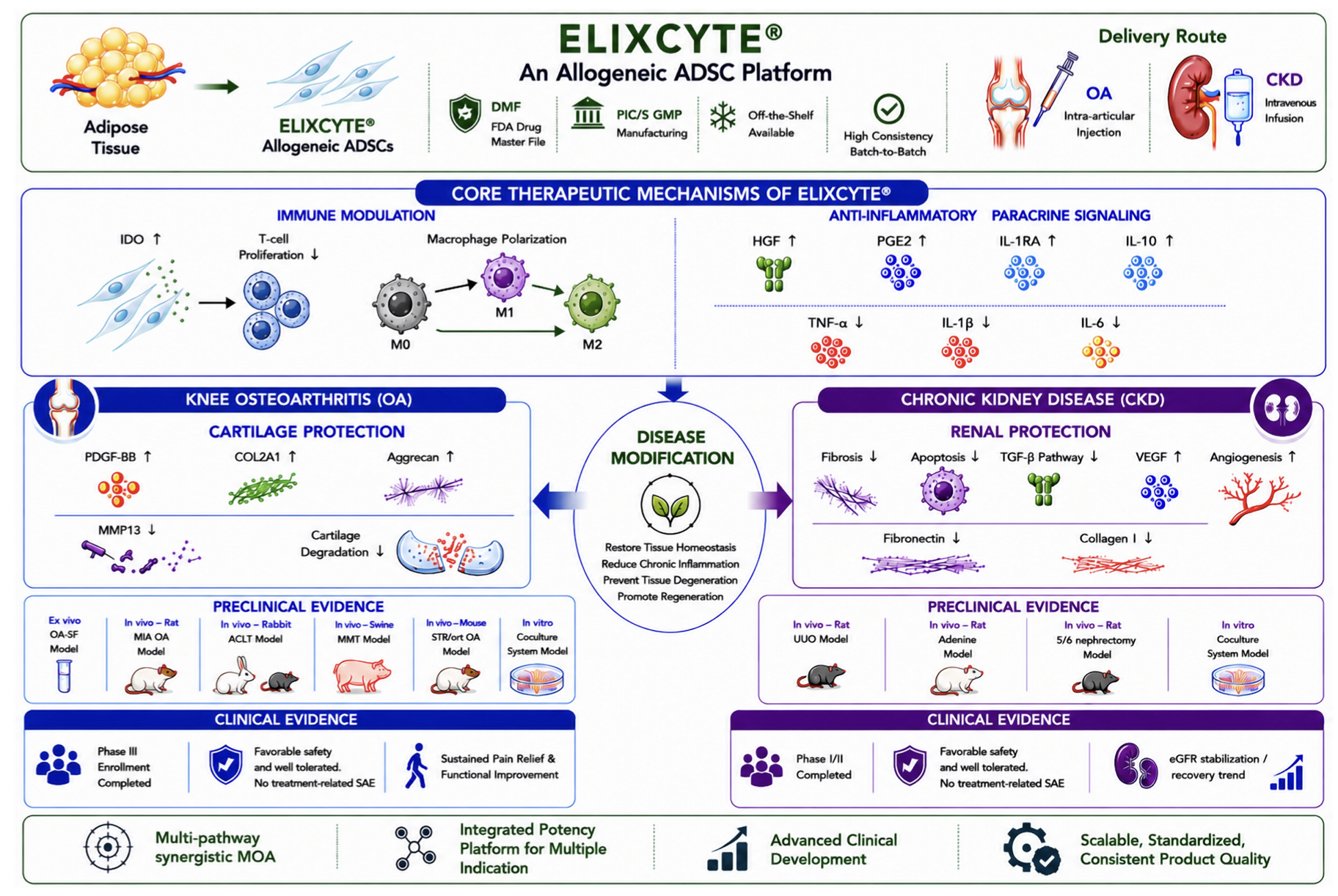
Figure 1. ELIXCYTE®: A Multi-Mechanistic Platform for Disease Modification in OA and CKD
In addition to its anti-fibrotic activity, ELIXCYTE® demonstrated pro-angiogenic potential through its secretion of vascular endothelial growth factor (VEGF) and other bioactive paracrine factors. Consistent with these observations, enhanced angiogenic activity and improved endothelial cell function were observed in experimental models, supporting its role in maintaining microvascular integrity within the injured kidney[8]. Furthermore, emerging evidence suggests that preservation of the renal microenvironment through anti-fibrotic and pro-angiogenic mechanisms may also contribute to protection against cellular injury and apoptosis, although the precise contribution of apoptosis-related pathways remains under investigation.
Collectively, these findings support a dual mechanism through which ELIXCYTE® simultaneously mitigates fibrotic progression and promotes microvascular repair. The consistency of these observations across multiple CKD models provides a strong biological rationale for the favorable safety profile and encouraging clinical outcomes observed in completed Phase I/II studies and further supporting the continued clinical development of ELIXCYTE® for CKD.
Clinical Translation of ELIXCYTE® in OA and CKD
In OA, ELIXCYTE® has successfully advanced into a randomized, double-blind Phase III clinical trial, with enrollment completed. Clinical observations demonstrated a favorable safety profile, no treatment-related serious adverse events (SAEs), and sustained therapeutic benefits up to one year following a single intra-articular administration, with effects maintained through 96 weeks of follow-up[12].
In parallel, ELIXCYTE® has completed Phase I/II clinical studies in CKD, demonstrating a favorable safety and tolerability profile with no treatment-related serious adverse events reported. In addition, stabilization of renal function and recovery trends in estimated glomerular filtration rate (eGFR) were observed in a subset of treated patients[13-15], supporting continued clinical evaluation and advancement toward Phase III development[15]. Notably, these findings suggest a potential ability of ELIXCYTE® to attenuate the progressive decline characteristic of CKD, an organ-failure paradigm historically regarded as irreversible. In contrast to the expected trajectory under conventional standard-of-care management where patients typically experience gradual deterioration of renal function over time as fibrosis progresses, ELIXCYTE® treatment was associated with stabilization of renal parameters and prevention of further functional decline following a single administration.
Collectively, these clinical observations are consistent with the immunomodulatory, cartilage-protective, and renal-protective activities identified across the ELIXCYTE® development program and provide important translational support for its ongoing clinical advancement.
Conclusion
The development of ELIXCYTE® illustrates how a scientifically driven cell therapy program can integrate clinical development, mechanistic understanding, and potency assessment into a unified regenerative medicine strategy.
Supported by a robust manufacturing infrastructure, a USFDA MF, and a PIC/S GMP-compliant production process, ELIXCYTE® has established a strong foundation for scalable and standardized, off-the-shelf allogeneic cell therapy development.
The collective evidence presented in this article highlights the potential of ELIXCYTE® as a standardized allogeneic cell therapy product capable of addressing multiple chronic degenerative diseases through shared biological mechanisms, including anti-inflammation, immunomodulation, cartilage protection, and renal protection. Clinical studies in osteoarthritis and chronic kidney disease have demonstrated favorable safety profiles together with encouraging therapeutic outcomes, while ongoing mechanistic and potency studies continue to strengthen the scientific foundation underlying its development.
Taken together, the findings presented in this article demonstrate how ELIXCYTE® integrates immunomodulatory, tissue-protective, and regenerative activities to address key pathological mechanisms shared across chronic degenerative diseases. By integrating translational science, regulatory-oriented potency strategies, and clinical development, ELIXCYTE® provides a promising framework for the future advancement of regenerative medicine and cell-based therapeutics.
Acknowledgment
We gratefully acknowledge the principal investigators with whom we collaborated on the clinical development of ELIXCYTE® for OA and CKD.
Conflict of interest
The authors declare no competing financial interests or personal relationships that could have appeared to influence the work reported in this paper.
References
- Katz JN, Arant KR, Loeser RF. Diagnosis and treatment of hip and knee osteoarthritis: a review. JAMA. 2021;325(6):568-578.
- Webster AC, Nagler EV, Morton RL, Masson P. Chronic kidney disease. Lancet. 2017;389(10075):1238-1252.
- Furman D, Campisi J, Verdin E, Carrera-Bastos P, Targ S, Franceschi C, et al. Chronic inflammation in the etiology of disease across the life span. Nat Med. 2019;25(12):1822-1832.
- Galipeau J, Sensébé L. Mesenchymal stromal cells: clinical challenges and therapeutic opportunities. Cell Stem Cell. 2018;22(6):824-833.
- Pittenger MF, Discher DE, Péault BM, Phinney DG, Hare JM, Caplan AI. Mesenchymal stem cell perspective: cell biology to clinical progress. NPJ Regen Med. 2019;4:22.
- U.S. Food and Drug Administration. Potency assurance for cellular and gene therapy products. Guidance for Industry. Silver Spring (MD): FDA; 2024.
- Chinnadurai R, Rajan D, Qayed M, Arafat D, Garcia M, Liu Y, et al. Potency analysis of mesenchymal stromal cells using a combinatorial assay matrix approach. Cell Rep. 2018;22(9):2504-2517.
- Liang CJ, et al. Clinical development of allogeneic adipose-derived mesenchymal stem cell therapy for chronic kidney disease: an integrated translational evidence framework. Cytotherapy. 2026;28(Suppl 1).
- Chen YH, Hung YP, Chen CY, Chen YT, Tsai TC, Yang JJ, et al. ELIXCYTE®, an allogenic adipose-derived stem cell product, mitigates osteoarthritis by reducing inflammation and preventing cartilage degradation in vitro. Curr Issues Mol Biol. 2024;46(8):8395-8406.
- Liang CJ, et al. Treatment efficacy and mechanism of action of ELIXCYTE® adipose-derived stem cells in an animal model of knee osteoarthritis. Cytotherapy. 2024;26(Suppl 1).
- Chang YH, et al. Timing of intra-articular injection of adipose-derived mesenchymal stem cells affects cartilage integrity and IL-18 expression in spontaneous osteoarthritis: a preclinical study. Cell Tissue Bank. 2025.
- Chang YH, Wu KC, Ding DC, Hsu CC, Wang YH, Liu HW, et al. Autologous adipose-derived stem cells for treating knee osteoarthritis: a randomized controlled trial. Stem Cells Transl Med. 2021;10(6):872-880.
- Wu MS, et al. Safety and efficacy of allogeneic adipose-derived mesenchymal stem cells in patients with chronic kidney disease. Stem Cell Res Ther. 2022.
- Wu MS, et al. Long-term follow-up of allogeneic adipose-derived stem cell therapy in chronic kidney disease. 2024.
- Wu MS, et al. Clinical outcomes of allogeneic adipose-derived stem cell therapy in chronic kidney disease. 2025.

UnicoCell Biomed is a biotechnology company focused on developing allogeneic, “off-the-shelf” cellular biologics for degenerative diseases.
ELIXCYTE® cell therapy platform across multiple late-stage product candidates:
- ELIXCYTE®-OA for knee osteo-arthritis which has successfully completed its Phase III clinical trial enrollment.
- ELIXCYTE®-CKD for chronic kidney disease, which has completed Phase I/II clinical trials with favorable safety profile and encouraging efficacy outcome.
ELIXCYTE® is resourced from healthy donor and expanded through a proprietary process. Through UnicoCell’s robustness manufacturing process allowing for scale-up production and guaranteeing exceptional batch-to-batch consistency with the evidence from accumulating long-term stability. To compliance with global acceptance of biologics and the strict safety benchmarks, UnicoCell followed ICH quality requirements and FDA industry guideline, and then built up the cell bank systems with the Master File (MF) acknowledgment from FDA. Furthermore, UnicoCell has past the inspections of PIC/S GMP pilot plant by TFDA and Cell Processing Center by Japan PMDA. Also, UnicoCell has established multiple platforms in potency assessments and MOA to rigorously validate the multi-targeted biological activities. ELIXCYTE® demonstrating a promising “multiple-indications medication” via the successfully targets shared pathological hallmarks across completely different organ systems. These platforms versatility holds the potential to address substantial and urgent unmet medical needs, bringing a transformative therapeutic option to patients suffering from irreversible degenerative diseases.


Leave a Reply