Chen-Kung Chou
Department of Life Sciences and Institute of Genome Sciences, National Yang Ming Chiao Tung University
From the first flicker of life on Earth, the cycle of day and night has been an inescapable backdrop—steady, rhythmic, and profoundly influential. As life evolved, it began not only to respond to this 24-hour cycle but to anticipate it. Today, we know this predictive biological timing system as the circadian rhythm, an internal clock that ticks within virtually every organism—from cyanobacteria to humans.
A Plant in the Dark
The story of circadian rhythms begins not with a microscope, but with a humble plant. In 1729, French astronomer Jean Jacques d’Ortous de Mairan placed a sensitive mimosa in total darkness. To his surprise, the plant’s leaves still opened during the day and closed at night. This suggested that an internal mechanism—rather than sunlight—was dictating its behavior. This pioneering experiment marked the birth of circadian biology.
Centuries later, in 1959, American physiologist Franz Halberg coined the term “circadian,” from the Latin circa diem(about a day), to describe these near-24-hour cycles in physiology. But what exactly orchestrates these rhythms deep within our cells? That mystery remained unsolved until the 1970s.
The Drosophila Clockmaker
The key to unlocking circadian biology came from an unlikely place: the behavior of fruit flies. Physicist-turned-biologist Seymour Benzer and his graduate student Ronald Konopka at Caltech devised a strategy to mutate and screen fruit flies for abnormalities in their emergence timing—when they hatched from their pupal cases. After analyzing nearly 2,000 flies, they identified three groundbreaking mutations in a single gene, which they aptly named period (per). One mutation caused no rhythmicity (per^0), another shortened the cycle to 19 hours (per^s), and a third lengthened it to 28 hours (per^l). These findings, published in 1971, showed for the first time that a single gene could govern biological timing. This foundational discovery opened the door to decades of circadian research.
The Gene That Sang
Enter Jeffrey Hall, Michael Rosbash, and Michael Young—three scientists whose paths converged to identify and clone the per gene. Their race culminated in 1984, when all three labs successfully isolated the gene, paving the way for molecular dissection of the biological clock. In 2017, they shared the Nobel Prize in Physiology or Medicine for their contributions.
But the story took an even more lyrical turn. In the lab of Hall and Rosbash, postdoc Bambos Kyriacou discovered that fruit fly mating songs—wing-generated courtship pulses—also followed rhythmic cycles. And when the team examined these songs in per mutants, they found the rhythm of the love song matched the circadian mutations: shorter rhythms sang faster songs, longer rhythms sang slower ones. It became clear that per didn’t control just one biological metronome—it was a master conductor of multiple internal clocks.
From Brain to Body: A Whole Symphony of Clocks
We once thought the brain’s suprachiasmatic nucleus (SCN) was the sole timekeeper. But in the early 2000s, researchers discovered a symphony of clocks scattered throughout the body—in the liver, skin, heart, lungs, kidneys, and even immune cells. Each peripheral clock maintains its rhythm but takes cues from the SCN, harmonizing like instruments under a conductor’s baton.
However, when these rhythms fall out of sync—a condition known as circadian misalignment—disruption ensues. Jet lag is a familiar example, but so is the metabolic confusion triggered by midnight snacks. The liver, expecting rest, poorly handles glucose, while insulin signals collide with a brain set to sleep. Over time, this discordance can lead to chronic disease.
The Rise of Chronomedicine
These insights gave birth to chronomedicine—the science of timing treatment to the body’s internal rhythms. In the late 1990s, French oncologist Francis Lévi conducted landmark trials showing that chemotherapy administered at optimal times (e.g., 10 p.m.) could nearly double effectiveness and reduce toxicity in colorectal cancer patients. A 2006 trial further showed that male patients benefited significantly from timed therapy, though results in females were more complex—highlighting sex-based differences in circadian pharmacodynamics.
Even cancer cells, it turns out, have clocks. In a vivid experiment, neuro-oncologist Joshua Rubin engineered glioblastoma cells to glow rhythmically using a fluorescent circadian gene. The cells “blinked” with life, and intriguingly, they responded best to the chemotherapy drug temozolomide when the circadian gene Bmal1 peaked in expression. If we could one day determine a patient’s tumor rhythm, we might tailor treatments for maximal efficacy.
Timing Is Everything—even in Surgery
Chronomedicine extends beyond cancer. In a 2018 study, patients undergoing cardiac surgery in the afternoon had half the complication rate compared to morning patients. Researchers linked this to another clock gene, Rev-Erbα, which peaks in the morning and may leave the heart more vulnerable to stress. Blocking Rev-Erbα in mice reduced post-surgical damage—a tantalizing lead for human applications.
And in pharmacology? Nearly half of the top 100 best-selling drugs in the U.S. target genes with circadian expression. Many, like cholesterol-lowering statins with short half-lives, work best when taken at night—when the liver’s cholesterol production surges. Yet most prescriptions ignore timing altogether.
The Ancient Clock: A Chinese Perspective
Interestingly, the concept of aligning treatment with time is not new. Over 2,000 years ago, Traditional Chinese Medicine proposed the “Twelve Meridian Clock,” in which each two-hour block of the day corresponds to heightened activity in a particular organ. The idea that physiological processes vary predictably over time is remarkably aligned with modern circadian science.
Conclusion: Time as Therapy
We now stand at the dawn of a new era, where time itself becomes a tool in diagnosis and treatment. As we unravel the molecular cogs of our internal clocks, we move closer to personalized medicine that doesn’t just ask “what” to prescribe—but also when.
Like a symphony, our body’s rhythms require precise coordination. Disrupt the tempo, and the music falters. Respect the rhythm, and we may find a new harmony in healing.
References
1. The Little Flies and their Genes: Nobel Lecture, December 8, 2017 by Jeffrey C. Hall.
2. Time Trails. Nature 556: 290-292; 2018
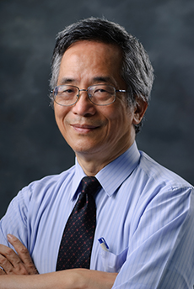
Professor Chen-Kung Chou, PhD
Department of Life Sciences and Institute of Genome Sciences
National Yang Ming Chiao Tung University, Taipei, Taiwan
Professor Chou is a distinguished academic with a rich educational and professional background in the life sciences. He completed his B.S. in Chemistry at Chung-Yung Christian College from 1967 to 1971 and earned his Ph.D. in Molecular Biology from the Albert Einstein College of Medicine between 1974 and 1979. His professional journey began as an Associate Fellow at the Institute of Biological Chemistry, Academia Sinica, Taiwan, from 1979 to 1981. He then served at the Taipei Veterans General Hospital in the Department of Medical Research, progressing from Associate Investigator to Investigator from 1981 to 2001. Professor Chou held a professorship at Yang Ming University in the Department of Life Science and served as Chairman of the Institute of Genetics before joining Chang Gung University in 2004, where he currently serves as a Professor in the Department of Life Sciences. His research interests focus on the growth control of human hepatoma cells and the anti-HBV and anti-aging properties of Chinese herbal medicines. Throughout his career, Professor Chou has been recognized with numerous honors, including the Distinguished Scientist award and multiple Outstanding Research Awards from the National Science Council, as well as a Fogarty International Fellowship.


Leave a comment