Prof. Kenneth Kaushansky MD, MACP
“It is my great honor to join the Board of the Asian Cellular Therapy Organization. It has been a pleasure to have watched the organization grow from its first meeting in 2010 in Japan to its current roster of over a dozen countries and regions. I am particularly impressed with ACTO’s stated pillars: fostering international translational research, helping to inform national and global regulatory agencies, promote collaboration amongst scientific and clinical entities, encouraging commercialization strategies of cellular therapies, and helping to educate principal investigators, lab directors, technologists and clinicians. It is not hyperbole to state that cellular therapies, or “living drugs” as some refer to them, represent an exciting and promising approach to solve so many of the serious disorders of human health. It is clear that medicine has become quite complex, especially true for cellular therapies, and medical problem solving is best approached as a “team sport”. As such, ACTO provides the perfect platform to bring together Asian basic and clinical scientists, the regulators and the commercial entities, all of whom are vital to bringing new cellular therapies from conception to treating patients.
As a new member of the Board, I was asked to provide a brief personal introduction to the members and participants of ACTO. My journey in medicine began as an undergraduate biochemistry student and medical student at the University of California at Los Angeles. I became fascinated with how the various cells, tissues and organs of human beings function, and why they stop working during various disease states.
I fell in love with hematology when as a second-year resident in Internal Medicine one of my mentors, Dr. Clem Finch, shared with me his belief that at that time (and I believe, still today) we understood the biochemistry of hematological diseases better than all other disciplines of medicine. That, coupled with the beauty of a blood or marrow smear, hooked me on hematology for life.
Another important epiphany came as a second-year medical student, when on the first day of our pharmacology course, Dr. Don Catlin shared that while 99% of all drugs at the time had been discovered by pure serendipity, one day, he mused, we will understand our diseases well enough that we will be able to rationally design drugs to treat human illness. I then mused, what a great career making rational drug discoveries might be. The third insight was shared by my mentor, Dr. John Adamson, when he introduced me to hematopoiesis and stem cell biology, and along with another mentor, Dr. Earl Davie, launched my career as a physician-scientist studying the role of growth factors in the development of the mature cells of the blood derived from hematopoietic stem cells.
“Chance favors the prepared mind”, a phrase coined in 1854 by Louis Pasteur, is one of my favorite observations in all of science. So much so that I placed that quote at the entrance to the new translational cancer center building I launch while serving as Senior Vice President for Health Sciences and Dean of the Renaissance School of Medicine at Stony Brook University in New York. But during my life as a biology watcher, I have also learned that sometimes it is an observation in a seemingly unrelated field that sheds critical light on your particular scientific problem. Having cloned and characterized several hematopoietic growth factors, including thrombopoietin, which was dependent on a study that appeared in the virology literature, my scientific attention turned almost entirely towards the hematopoietic stem cell, for two reasons. Somewhat surprisingly, thrombopoietin turned out to be one of only two proteins absolutely essential for hematopoietic stem cell survival (the other being stem cell factor), and secondly. that my primary clinical interest was in patients with myeloproliferative neoplasms, clonal malignancies of the hematopoietic stem cell. From this work we discerned that thrombopoietin and its receptor in one way or another is critically involved in the pathogenesis of a majority of patients with myeloproliferative neoplasms.
Over my career I have witnessed rational drug and cellular design applied to nearly every aspect of my clinical and research experience. Hence, my great interest in participating in ACTO, an organization devoted to bringing “living drugs” to human disease. I am also strongly attracted to the ACTO educational pillar. In addition to my numerous roles as a medical educator at the three universities I have called my professional home, the University of Washington, the University of California at San Diego, and Stony Brook University, I have led both the educational and scientific programs of the annual meeting of the American Society of Hematology, have served as Editor-in-Chief of the journal Blood, and for the past 20 years as lead editor of Williams Hematology, about to launch its 11th edition. And now having transitioned to Distinguished Professor and Dean Emeritus at Stony Brook, I now serve as Distinguished Visting Professor at Chang Gung University in Taiwan, sharing insights with students into the future of medicine in Taoyuan one month each year. In short, having visited Asia well over a dozen times, and now my strong affection for so many Asian countries, I cannot wait to join my good friends, Chair of ACTO, Professor Akihiro (Sam) Shimosaka, and Editor-in-Chief of ACTO Times, Dr. Yen-Hua (Rita) Huang, and all the other distinguished members and participate as a member of the Board of the Asian Cellular Therapy Organization.”
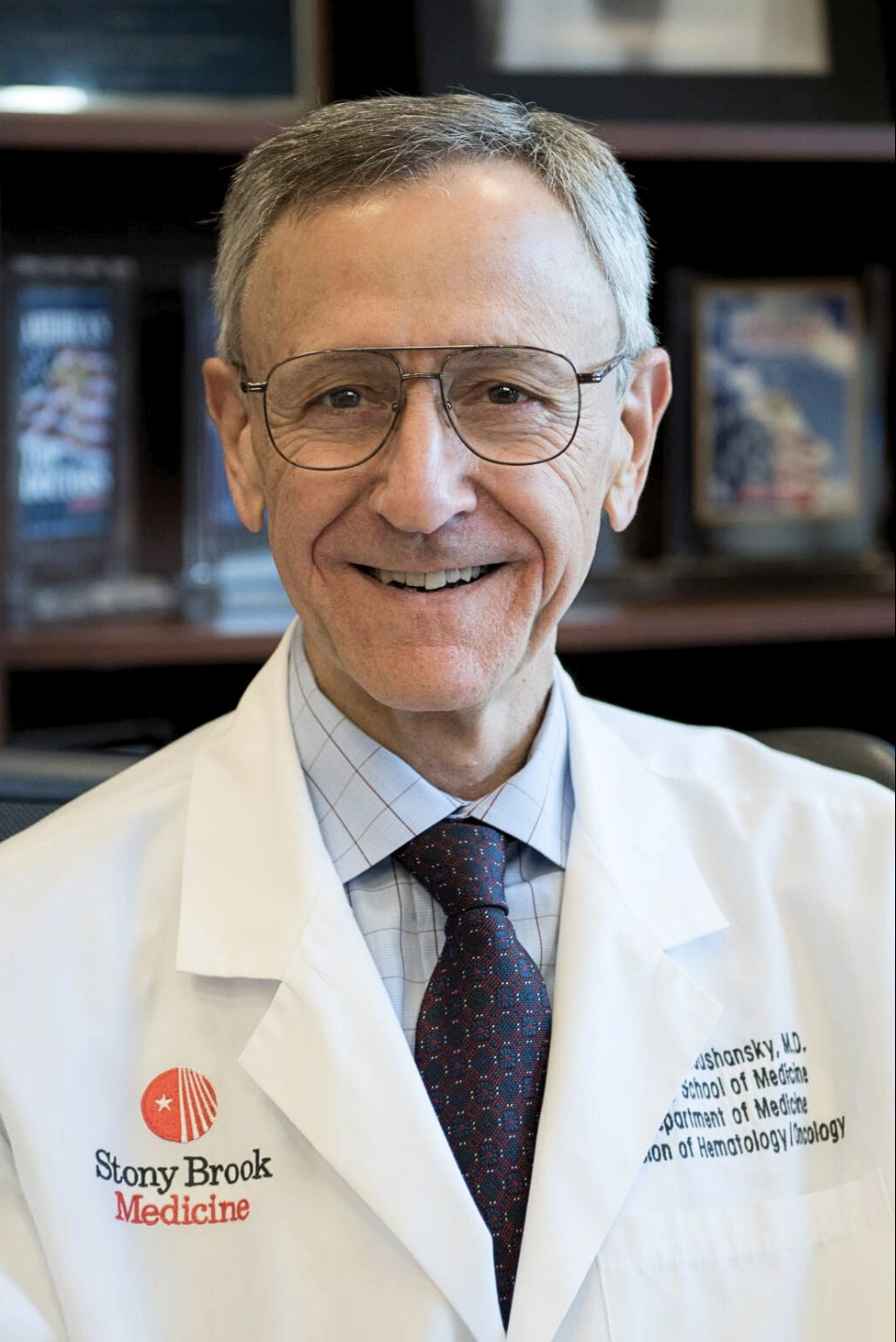
Kenneth Kaushansky MD, MACP
Dean and Distinguished Professor Emeritus,
Renaissance School of Medicine,
Stony Brook University
 THE ACTO TIMES
Leave a comment