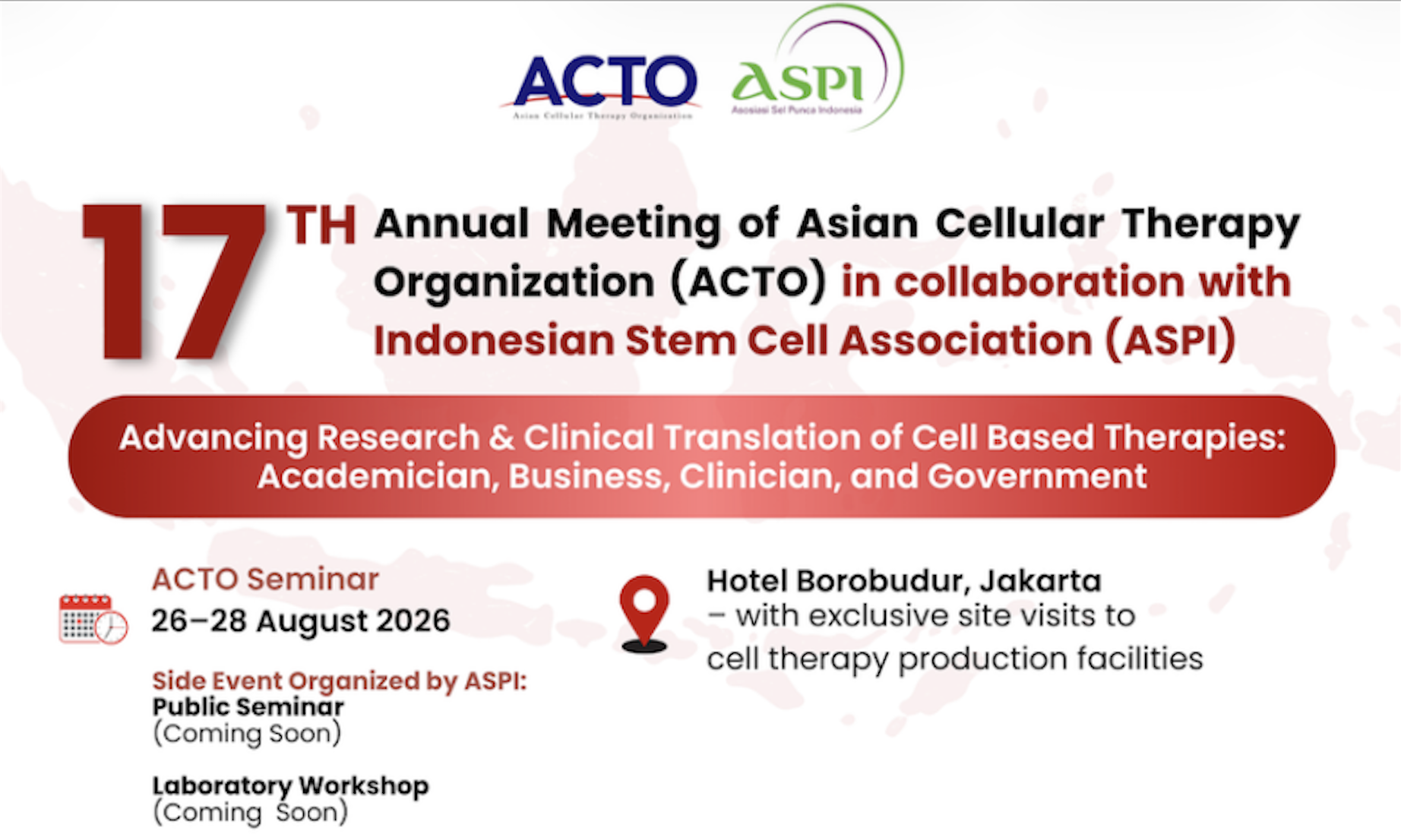
Welcome to the 17th Annual Meeting of the Asian Cellular Therapy Organization (ACTO), organized in collaboration with the Indonesian Stem Cell Association (ASPI).
Since its establishment, the ACTO Annual Meeting has served as a premier scientific platform advancing cellular therapy and regenerative medicine across Asia. Over the years, the meeting has been successfully hosted in more than 15 cities across Asian countries, bringing together leading scientists, clinicians, industry innovators, and regulatory stakeholders to foster collaboration and accelerate clinical translation.
ACTO 2026 will take place in Indonesia for the first time, marking a significant milestone and reflecting the country’s growing role in biomedical research and clinical translation within the region.
Location : Hotel Borobudur Jakarta
Meeting date : 26–28 August 2026
– Includes exclusive site visits to cell therapy production facilities
Programme Highlights :
- Advancing research and clinical translation of cell-based therapies
- Multidisciplinary sessions involving academicians, clinicians, industry, and government
- Scientific, regulatory, clinical, and public sessions
- Organization and networking meetings
* Register here:*
bit.ly/EarlyRegistrationACTOASPI2026
We are honored to welcome the international cellular therapy community to Indonesia for this important scientific gathering. The scientific meeting will be, featuring a multidisciplinary program designed to promote knowledge exchange, strengthen regional partnerships, and advance research and clinical translation of cell-based therapies across academia, industry, community, and regulatory sectors.
The Rich and Diverse Culture of Indonesia
Indonesia is one of the most culturally diverse countries in the world. Located in Southeast Asia, this vast archipelago consists of more than 17,000 islands and is home to over 300 ethnic groups. Each region has its own traditions, languages, and customs, making Indonesian culture incredibly rich and unique.
Diversity in Ethnicity and Language
Indonesia’s cultural diversity is reflected in its many ethnic groups, including the Javanese, Sundanese, Batak, and Balinese communities. Although hundreds of local languages are spoken across the country, the national language, Indonesian language (Bahasa Indonesia), unites people from different regions and backgrounds.
Traditional Arts and Performances
Traditional arts play an important role in Indonesian culture. One of the most famous forms of Indonesian art is Batik, a traditional textile art that involves wax-resist dyeing techniques to create intricate patterns. Batik is widely worn during formal occasions and cultural ceremonies.
Indonesia is also known for its traditional performing arts. The Wayang kulit shadow puppet theatre tells stories from ancient epics through intricately carved leather puppets. These performances are often accompanied by the melodic sounds of the Gamelan orchestra, which uses instruments such as gongs, metallophones, and drums.
Festivals and Religious Influences
Religion strongly influences Indonesian culture. The country recognizes several religions, including Islam, Christianity, Hinduism, and Buddhism. As a result, cultural celebrations and festivals vary widely across regions.
For example, the Hindu-majority island of Bali celebrates Nyepi, also known as the Day of Silence, when the entire island observes a day of reflection with no travel, work, or entertainment. Meanwhile, Muslims across the country celebrate Eid al-Fitr after the holy month of Ramadan with family gatherings, prayers, and festive meals.
Indonesian Cuisine
Food is another essential element of Indonesian culture. Indonesian cuisine is known for its rich flavors, spices, and regional diversity. Popular dishes include Nasi goreng (fried rice), Satay (grilled skewered meat served with peanut sauce), and Rendang, a slow-cooked beef dish that originated from West Sumatra.
Meals are often shared with family and friends, reflecting the communal nature of Indonesian society.
Indonesia’s culture is a vibrant blend of traditions, beliefs, and artistic expressions shaped by centuries of history and interaction between different communities. From its diverse ethnic groups and languages to its traditional arts, festivals, and cuisine, Indonesian culture continues to thrive while preserving its unique identity. Exploring Indonesia’s culture offers valuable insight into the values of community, respect, and harmony that define this remarkable nation.
 THE ACTO TIMES
Leave a comment