Yunxin Chen 1, Francesca LWI Lim 1, Srinivasan Kellathur 2 & Mickey B.C. Koh 3
1 Singapore General Hospital and National Cancer Centre, Singapore
2 Roche Singapore Technical Operations, Singapore
3 City St Georges, University of London, UK and St George’s University Hospital, London, UK
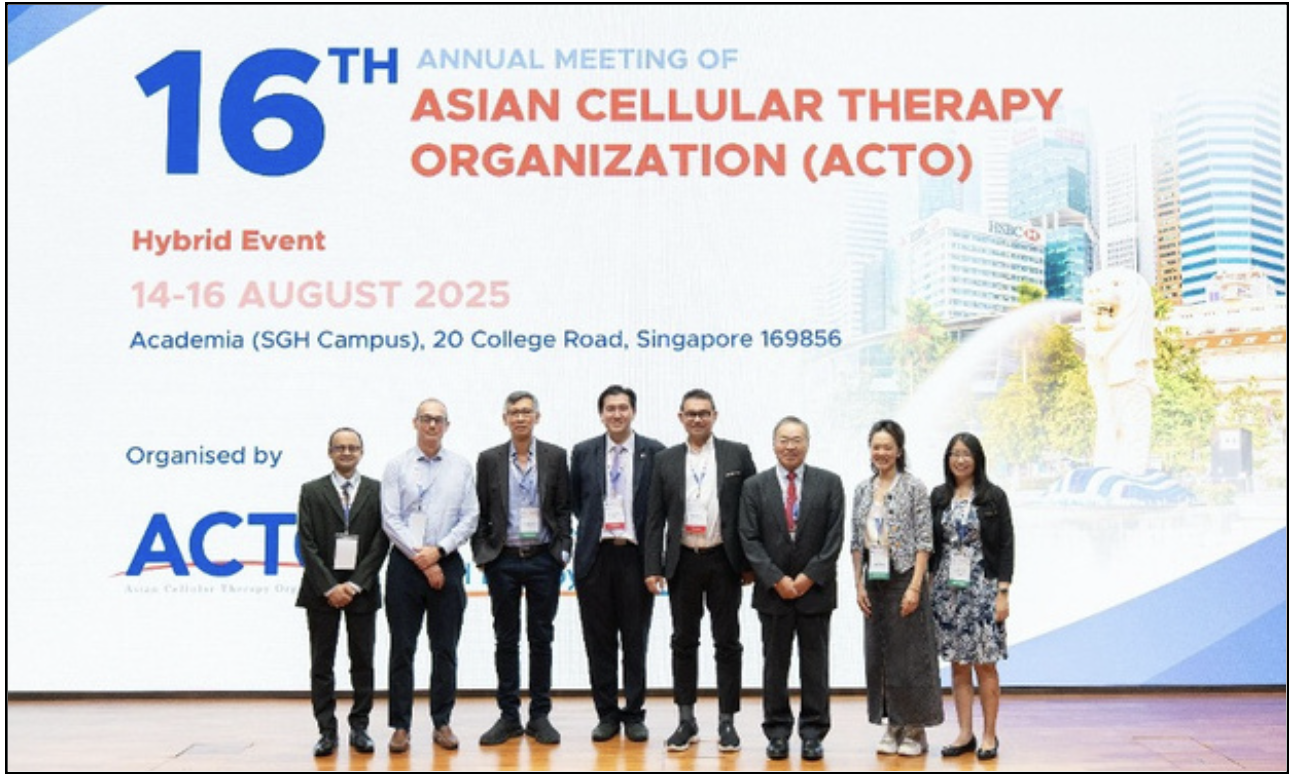
From Left to Right: Adj Asst Prof Srinivasan Kellathur (Local Organizing Committee Member), Dr Stefaan Van der Spiegel (Plenary Speaker), Prof Mickey Koh (ACTO President), Dr Cheong Wei Yang (Guest-of-Honor), Professor Christian Chabannon (Plenary Speaker), Prof Akihiro Shimosaka (ACTO Chairperson), Clin Asst Prof Francesca Lim (Local Organizing Committee Member), Clin Asst Prof Chen Yunxin (Local Organizing Committee Member)
The 16th Annual Meeting of the Asian Cellular Therapy Organization (ACTO) was held in Singapore from 14–16 August 2025, and brought together leading scientists, clinicians, regulators, and industry partners across the Asia-Pacific region. The meeting focused on the latest advances in cell and gene therapy, regional manufacturing capabilities, and provided a platform to discuss and address real-world challenges of affordability.
This year’s meeting showcased the region’s growing strength in scientific innovation and translational capability and sought collaborative efforts to accelerate cell therapy in Asia. The conference opened with a welcome address by Guest of Honour Dr Cheong Wei Yang, Chairman of the Board Oversight Committee of the Advanced Cell Therapy and Research Institute, Singapore (ACTRIS) — Singapore’s key facility for GMP-grade cell manufacturing. Dr Cheong highlighted Singapore’s commitment to drive innovation through regional and international partnerships, emphasizing how these are vital to building a sustainable ecosystem for advanced therapeutics.
Global Perspectives and Regional Lessons
The plenary session featured two distinguished international speakers who provided invaluable global perspectives. Professor Christian Chabannon shared insights from the GoCART Coalition, pan-European initiative that unites stakeholders across academia, industry, and regulatory agencies to maximize the potential of cellular immunotherapies. Such structured collaboration and harmonized practices may serve as a reference for Asia’s rapidly evolving cell therapy landscape. Dr Stefaan Van der Spiegel, from the European Commission, followed with a discussion on the EU framework for Substances of Human Origin (SoHO) — offering important lessons on the regulatory integration of cell and gene therapies, and considerations for policy development in Asia.
Scientific and Translational Advances
The scientific program covered a broad and dynamic range of topics, including CAR-T cells and other immune effector cell therapies such as mesenchymal stromal cells, exosomes, and gene therapy. There were also industry-led sessions highlighting advances in manufacturing technologies, process optimization, and novel therapeutic platforms. Sessions on regenerative medicine showcased emerging applications in cartilage repair, skin regeneration, and ocular therapies amongst others, reflecting the expanding indications of cell-based interventions beyond oncology.
A regional highlight of the meeting was the country update session, where representatives from various Asian nations presented progress reports on clinical programs and regulatory pathways. The presentations reflected both diversity and growth — illustrating how different countries are advancing toward shared goals of accessible, safe and efficacious cell therapy.
Regulatory and Translational Focus
Among the most anticipated sessions was the Regulatory Panel Session: “Pursuing Cell Therapy Approval in the Region” , which generated enthusiastic audience participation. The discussion, detailed in a companion article, explored pathways and strategies for navigating evolving regulatory frameworks across Asia. The session reinforced the importance of ongoing dialogue between innovators and regulators to translate promising therapies safely and efficiently into clinical practice.
Ethics of cell and gene therapy was also explored together with equity of access to such novel yet costly therapies.
Delegates also gained insight into translating cell therapy products from bench to bedside. A guided visit to ACTRIS provided participants with a closer look at Singapore’s national cell manufacturing capabilities and its role in supporting both academic and commercial development.
Building Networks and Future Directions
The meeting concluded with strong positive feedback from participants and opened doors for collaboration with ACTO serving as a vital platform for regional exchange, enabling the collective advancement of cellular therapies in Asia. The 16th ACTO Annual Meeting reaffirmed the organization’s mission to bridge science, regulation, and clinical practice, fostering a community dedicated to making advanced cell and gene therapies accessible to patients across the region. We look forward to the next meeting ACTO 2026 set to take place in Jakarta, Indonesia.
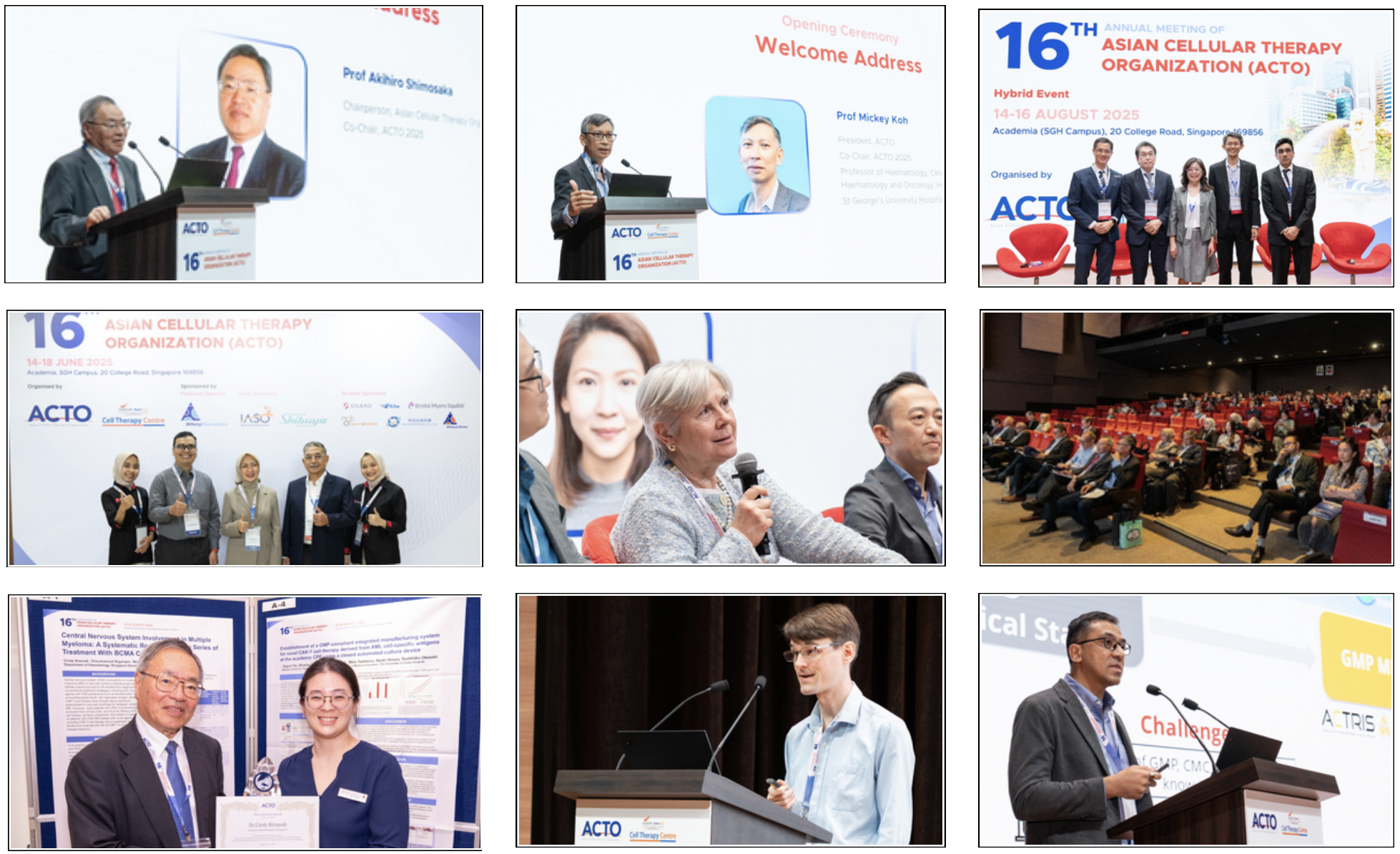
Photo Courtesy of ACTO 2025 Organizers
 THE ACTO TIMES
Leave a comment